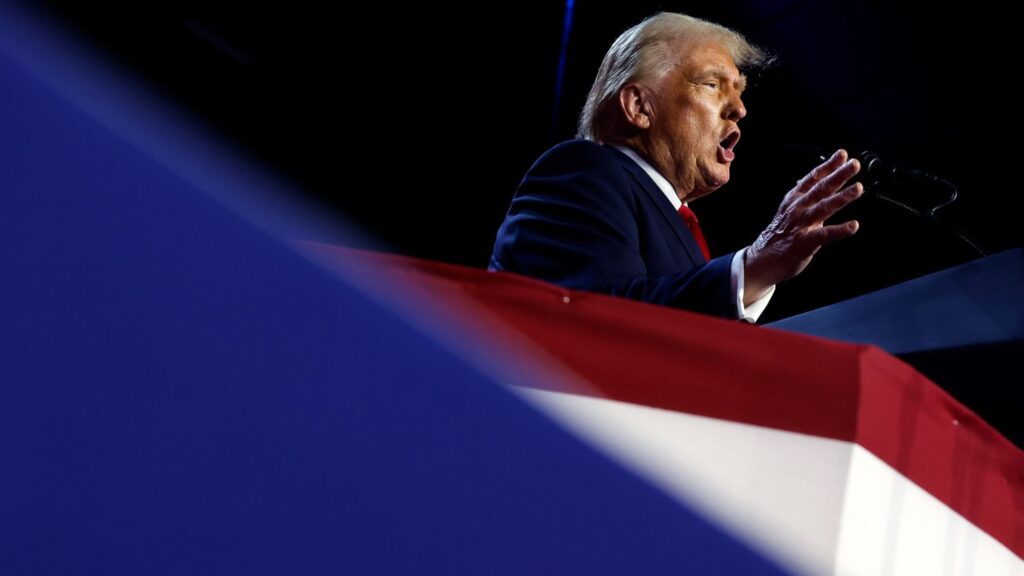
With Donald Trump’s reelection, Ukraine may soon face a significant shift in U.S. support that could alter the course of its war with Russia.
Throughout his campaign, Trump and his running mate, JD Vance, have expressed skepticism about continued U.S. commitment to Ukraine, particularly as the war stretches into its third year. Trump has hinted at pressuring Ukraine into an uneasy truce with Russia, casting doubt on the level of U.S. assistance going forward.
Trump’s victory comes at a critical juncture for Kyiv, as Russia has been steadily gaining ground in eastern Ukraine, particularly in the Donbas region, which Russian President Vladimir Putin aims to fully capture. Ukrainian Commander-in-Chief Oleksandr Syrskyi reported on Saturday that the situation on the front lines remains “difficult,” with some areas requiring continuous resupply of Ukrainian forces.
Meanwhile, Russia appears to be reinforcing its military with North Korean troops. U.S. officials have warned that up to 10,000 North Korean soldiers are stationed in Russia’s Kursk region and could soon be deployed against Ukraine.
Under President Biden, the U.S. has committed tens of billions of dollars in aid to Ukraine, including both military assistance and economic support. The Biden administration intends to continue providing as much aid as possible before Trump takes office.
Trump has long had a complicated relationship with Ukrainian President Volodymyr Zelensky, often praising Russian President Putin while criticizing Zelensky. In fact, Trump’s attempt to leverage U.S. military aid to Ukraine in exchange for an investigation into his political rivals was the central issue in his first impeachment in 2019.
In his congratulatory message to Trump on Wednesday, Zelensky expressed appreciation for Trump’s stated commitment to “peace through strength,” while emphasizing Ukraine’s interest in continuing strong political and economic cooperation with the U.S.
“We look forward to an era of a strong United States of America under President Trump’s decisive leadership,” Zelensky said. “We rely on continued strong bipartisan support for Ukraine in the United States.”
Trump has repeatedly claimed that the war in Ukraine would never have started if he had been president, and he has promised to end the conflict quickly—at times suggesting that he could resolve it in a day. During the September presidential debate with Vice President Kamala Harris, Trump was unwilling to commit to Ukraine’s victory over Russia, and he suggested that a “bad deal” with Moscow might have been better than the current situation.
“If they made a bad deal, it would have been much better. They would have given up a little bit and everybody would be living,” Trump said.
When Trump met Zelensky in New York in late September, he reiterated that he would work to broker a deal “for both sides.” Trump also emphasized his positive relationship with Putin, suggesting that the war could be resolved “very quickly” if he wins the presidency.
Zelensky, while open to negotiations, has made clear that Ukraine’s stance is one of strength. In late October, he remarked that “Trump talks a lot, but I didn’t hear him say he would reduce support for Ukraine.” Zelensky noted that in their September meeting, the two leaders discussed Ukraine’s “Victory Plan” and ways to end Russian aggression.
However, Zelensky also acknowledged the uncertainty regarding future U.S. support under Trump. In an interview with South Korea’s KBS, Zelensky warned that if U.S. support weakens, Russia would likely seize more territory, making it harder for Ukraine to secure a victory.
“Our stance isn’t about territorial compromises, but about exploring diplomatic paths that depend on the U.S. maintaining its commitment,” Zelensky said. “A genuine desire from the United States to end this war swiftly is crucial.”
In the lead-up to the election, the U.S. and its allies made efforts to “Trump-proof” support for Ukraine. NATO, for example, has taken steps to coordinate military aid and training for Ukraine, with the U.S. playing a central role. Additionally, the Biden administration contributed $20 billion of the G7’s $50 billion loan package for Ukraine, funded partly by frozen Russian assets.
As Trump prepares to take office, Ukraine’s leaders are closely watching the future of U.S. support, aware that a shift in American policy could have far-reaching consequences for the war’s outcome
