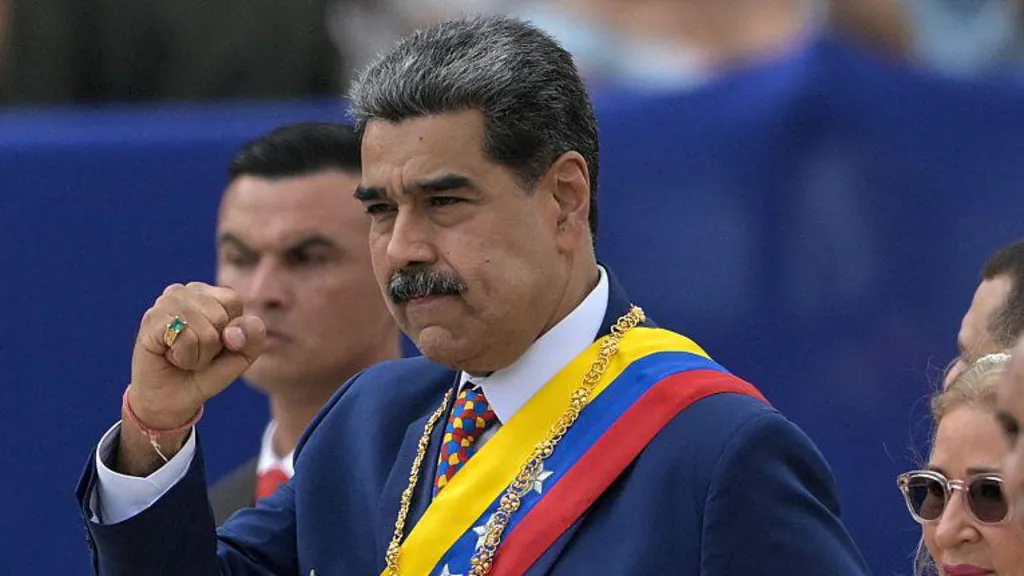
The United States has escalated its efforts to capture Venezuelan President Nicolás Maduro, offering a $50 million reward for information leading to his arrest. This move comes as the US intensifies accusations against Maduro, labeling him as “one of the largest narco-traffickers in the world.”
This announcement by the US Department of Justice, made by Attorney General Pam Bondi, sees the reward doubled from its original offer of $25 million. Bondi also linked Maduro directly to drug smuggling operations, citing his involvement with criminal groups, including the notorious Tren de Aragua gang and Mexico’s Sinaloa Cartel.
President Trump, who has been a long-time critic of Maduro, has previously accused the Venezuelan leader of being part of a vast narcotics trade that he claims aims to flood the US with illegal drugs. The Trump administration has also alleged that Maduro worked with Colombia’s Farc rebels to use cocaine as a weapon against the US.
Bondi went further on Thursday, claiming that the US Drug Enforcement Administration (DEA) had seized over 30 tons of cocaine connected to Maduro’s regime. Seven tons of this seizure were allegedly directly linked to Maduro himself. Despite these claims, Maduro has denied any personal involvement in drug trafficking, dismissing the US allegations as politically motivated.
The US has long been at odds with the Maduro government, with a series of charges including corruption, narco-terrorism, and drug trafficking. However, Venezuelan Foreign Minister Yvan Gil dismissed the reward offer, calling it “pathetic” and accusing the US of using it as “political propaganda.”
Gil added that the US administration was attempting to shift attention away from domestic controversies, particularly the fallout from the handling of the Jeffrey Epstein case.
The renewed efforts come on the back of a turbulent period for Venezuela, with Maduro facing domestic unrest and widespread international condemnation over his controversial re-election in January. Allegations of vote-rigging and human rights abuses have marred his time in office, which he has held since the death of Hugo Chávez in 2013.
The US continues to apply pressure on Maduro’s regime, supported by international sanctions imposed by the EU and the UK earlier this year. Meanwhile, Maduro remains firmly in power despite sustained opposition protests and violence against dissenting voices.
In June, former Venezuelan military intelligence chief Hugo Carvajal, once a close ally of Maduro, was convicted of drug trafficking charges in Spain. Carvajal, who fled to Europe after opposing Maduro, later changed his plea to guilty. His trial fuelled speculation that he had struck a deal with US authorities, providing evidence to incriminate the Venezuelan leader.
This intensification of US pressure on Maduro is a sign of the ongoing tensions between the two countries, with no indication of a shift in the situation in Venezuela in the near future.
