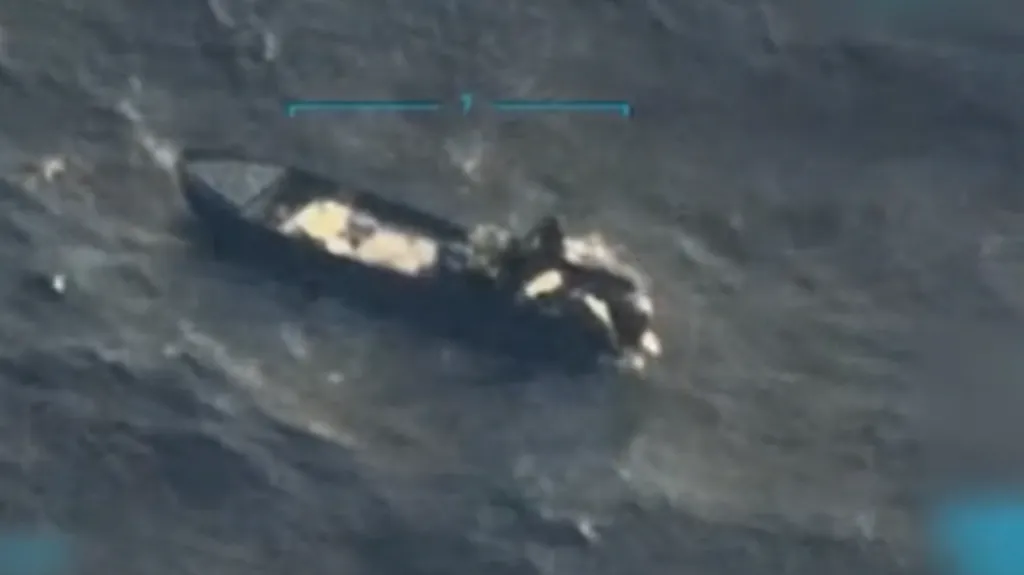
President Donald Trump said on Monday that the US military destroyed an alleged Venezuelan drug vessel traveling in international waters toward the United States, killing three men in what he described as a strike against “violent drug trafficking cartels.” He offered no evidence that the boat was carrying narcotics.
The strike marked a sharp escalation in tensions between Washington and Caracas, which have spiraled in recent weeks amid accusations of drug trafficking and alleged violations of international law. Shortly before Trump’s announcement, Venezuelan President Nicolás Maduro vowed to defend the country against US “aggression,” calling top American diplomat Marco Rubio the “lord of death and war.”
“This morning, on my orders, US military forces conducted a second kinetic strike against positively identified, extraordinarily violent drug trafficking cartels and narcoterrorists,” Trump said on Truth Social. “These extremely violent drug trafficking cartels pose a threat to US national security.”
A video Trump posted showed a vessel on open water erupting into flames after an apparent strike. Speaking later from the Oval Office, Trump said US forces had “recorded proof and evidence” that the targeted boats belonged to narco-terrorist groups.
“All you have to do is look at the cargo — it was spattered all over the ocean — big bags of cocaine and fentanyl all over the place,” he said. “We recorded them. It was very careful, because we know you people would be after us. We’re very careful.”
Trump claimed maritime drug trafficking to the US had fallen under his administration’s efforts but acknowledged narcotics were still entering the country by land. “We’re telling the cartels right now, we’re going to be stopping them too,” he said.
Rubio defended the first US attack last week on another boat allegedly carrying drugs from Venezuela, which killed all 11 people on board. He told Fox News that Washington had “100% fidelity and certainty” that the vessel was trafficking drugs to the US. “What needs to start happening is some of these boats need to get blown up,” Rubio said, calling Maduro “a direct threat to the national security” of the United States.
Maduro responded later Monday that relations with the US had “been destroyed by their bomb threats.” “We have moved from a period of battered relations to a completely broken one,” he said, adding that Venezuela would “fully” exercise its “legitimate right to defend itself.”
Legal experts previously told the BBC that the initial fatal strike in international waters may have violated maritime law and international human rights statutes.
Asked on Sunday if the US might “start doing strikes on mainland Venezuela,” Trump replied, “We’ll see what happens.” Speaking in New Jersey, he accused Venezuela of “sending us their gang members, their drug dealers and drugs,” and said maritime traffic in the southern Caribbean had dropped significantly “since the first strike.”
Venezuela retaliated after the 2 September attack by flying two F-16 fighter jets over a US Navy destroyer. Trump later warned that any Venezuelan aircraft putting “us in a dangerous situation” would be shot down.
After a brief lull, tensions spiked again on Saturday when Venezuelan Foreign Minister Yván Gil accused US forces of boarding and seizing a “small, harmless” Venezuelan fishing vessel named Carmen Rosa for eight hours. Venezuela’s Ministry of Information released a photo of the blue-and-white vessel docked in a harbor, alleging the seizure was “illegal and hostile” and accusing the US of “looking for an incident to justify escalating war in the Caribbean, with the aim of regime change” in Caracas.
The US, along with the UK and several other countries, has refused to recognize Maduro’s re-election in July 2024, citing evidence from opposition groups and independent observers that his rival Edmundo González had won by a landslide.
US officials have accused Maduro of leading a drug trafficking syndicate known as the Cartel of the Suns and have offered a $50 million reward for information leading to his arrest. Maduro has denied the allegations, calling them an “imperialist move” to depose him. He has urged Venezuelans to enlist in the civilian militia, a force public sector workers say they are being pressured to join.
As Washington and Caracas exchange threats, legal experts warn that the latest strike could draw the two nations closer to direct military confrontation, with profound implications for regional stability and international law.