US airstrikes on Iran’s nuclear facilities on Saturday did not cripple the country’s nuclear program as previously claimed, a Pentagon intelligence assessment has revealed. According to sources familiar with the Defence Intelligence Agency’s evaluation, the strikes likely set back Iran’s nuclear ambitions by only a few months rather than obliterating them.
While the airstrikes targeted key sites in Iran’s nuclear infrastructure, including the Fordo, Natanz, and Isfahan facilities, the damage appears to be limited to aboveground structures. Sources told CBS News that the underground centrifuges, which are crucial to Iran’s uranium enrichment process, remain largely intact, and the nuclear program’s core capabilities remain unaffected.
“The assessment we’ve seen suggests that the bombing only delayed Iran’s nuclear aspirations by a few months at most,” said one US official, speaking on condition of anonymity. “The enrichment stockpile wasn’t eliminated, and much of the damage was to the facilities above ground.”
Damage and Intelligence Analysis
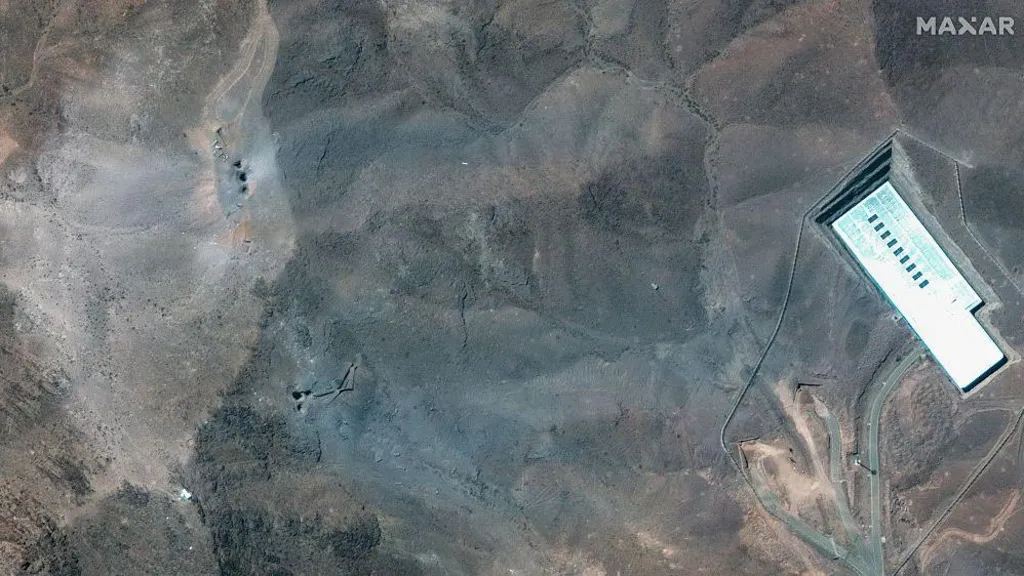
The Pentagon deployed advanced “bunker buster” bombs capable of penetrating up to 18 meters (60 feet) of concrete or 61 meters (200 feet) of earth. Despite the precision of these bombs, satellite imagery following the strikes revealed extensive surface damage to the Fordo site, including numerous craters, but no significant damage to the subterranean facilities.
While some of Iran’s enriched uranium stockpile was reportedly moved before the strikes, according to intelligence sources, the extent of the damage to the underground infrastructure remains unclear. Satellite images of the Fordo complex show significant surface impact, but the true scope of the destruction below ground will likely require further assessment.
Gen. Dan Caine, Chairman of the Joint Chiefs of Staff, confirmed that the three nuclear sites suffered severe damage but acknowledged that a full evaluation of the underground facilities would take time. “All three sites sustained extremely severe damage and destruction,” he told reporters, though he noted that the bombings’ impact on Iran’s nuclear capabilities was not as decisive as earlier portrayed.
Iran’s Deputy Political Director, Hassan Abedini, countered that the targeted nuclear sites had been evacuated “a while ago,” suggesting that the attack did not cause significant harm. He claimed the critical materials had already been removed before the US bombings.
US and Israeli Reactions
The White House swiftly rebuffed the Pentagon assessment, with a spokesperson calling it “flat-out wrong” and dismissing it as the result of a leak by a “low-level loser in the intelligence community.” Meanwhile, President Donald Trump reiterated that the strikes had completely destroyed Iran’s nuclear facilities, dismissing any contrary claims as an attempt to undermine the success of the mission.
US Defence Secretary Pete Hegseth also defended the strikes, claiming that they “obliterated Iran’s ability to create nuclear weapons,” despite the conflicting reports on the actual damage to the country’s nuclear program.
Israeli officials, similarly, hailed the strikes as a major victory in curbing Iran’s nuclear ambitions, with Prime Minister Benjamin Netanyahu praising the destruction of what he called “immediate existential threats.” Netanyahu claimed that Israel had effectively neutralized two key threats from Iran: its nuclear program and its missile stockpile.
However, US Congressman Brad Sherman expressed doubts, stating that the administration had not clarified whether the strikes had actually destroyed Iran’s ability to enrich uranium or neutralize its centrifuges. Sherman noted that satellite images showed trucks moving materials in the days leading up to the attack, raising questions about the true effectiveness of the bombing campaign.
Retaliation and Escalation
In response to the airstrikes, Iran launched a missile attack on the Al-Udeid Air Base in Qatar, where thousands of US troops are stationed. The attack, however, was intercepted, and no casualties were reported. Tensions remain high, with a ceasefire brokered between Iran and Israel following the missile strike.
David Albright, president of the Institute for Science and International Security, commented that Iran’s nuclear program would be set back by significant time and resources, warning that any attempts to rebuild would likely face further US and Israeli scrutiny. Albright indicated that Iran risks additional attacks if it tries to resume its nuclear efforts.
Looking Ahead
As the situation unfolds, further intelligence assessments may offer more clarity on the extent of the damage to Iran’s nuclear infrastructure. While US officials maintain that the mission was a success, questions remain regarding the long-term impact of the strikes and the broader implications for Iran’s nuclear capabilities.
The ongoing tensions highlight the fragility of the region, with military actions continuing to shape the geopolitical landscape. With intelligence reports still developing, it is likely that new information will emerge in the coming weeks, potentially altering the current understanding of the attack’s effectiveness.
