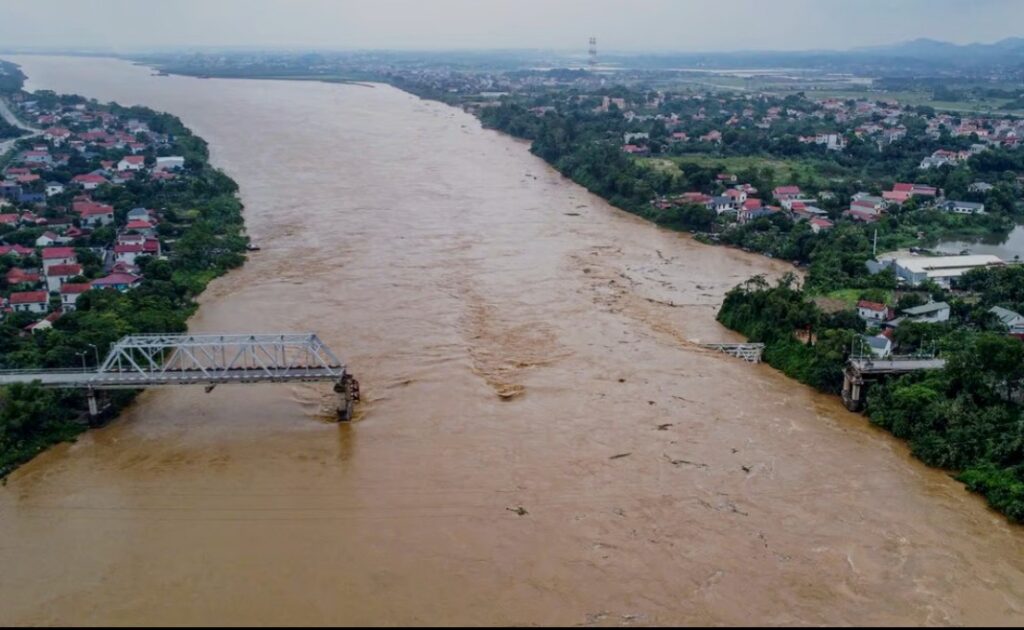
Vietnam is on high alert as powerful Typhoon Wipha approaches its northern coastline, prompting mass evacuations, travel disruptions, and emergency preparedness efforts. The storm, already blamed for multiple deaths in the Philippines, is expected to make landfall early Tuesday between Hai Phong and Thanh Hoa provinces, bringing torrential rains, strong winds up to 166 km/h, and the threat of deadly flash floods and landslides.
Rising Toll in the Philippines
Before reaching Vietnam, Wipha intensified seasonal monsoon rains in the Philippines, triggering floods and landslides that have claimed at least three lives and forced the evacuation of nearly 90,000 people. Authorities report that over 800,000 residents have been affected by the storm’s severe conditions, including damaged homes, disrupted power supplies, and blocked roads.
Vietnam’s Urgent Response
Vietnamese Prime Minister Pham Minh Chinh has directed a full-scale national response, ordering all fishing and cargo vessels to return to shore, suspending tourism activities in coastal areas, and dispatching rescue and medical teams to high-risk zones.
More than a dozen domestic and international flights have been cancelled by Vietnam Airlines, Pacific Airlines, and Vietjet. Authorities have also warned of major risks to aquaculture, with over 150,000 hectares of fish farms and 20,000 floating cages located directly in the storm’s path.
Tragedy in Ha Long Bay
A grim reminder of Wipha’s destructive power came on Saturday, when a tourist boat capsized during a sudden thunderstorm in Ha Long Bay. At least 37 people were killed, including several children. Survivors said the boat overturned in mere seconds. Rescue teams continue to search for four missing passengers, though worsening weather conditions are hampering efforts.
Flood Risk in Northern Vietnam
The National Center for Hydrometeorological Forecasting has issued warnings for severe flooding in northern provinces and landslides in mountainous regions. Hanoi and surrounding areas are preparing for urban inundation, while military and civil defense forces are on standby.
Storm’s Regional Path and Climate Concerns
Typhoon Wipha has already battered parts of Hong Kong, southern China, and Taiwan, uprooting trees, disrupting flights, and damaging infrastructure. Meteorologists link the storm’s unusual strength to rising ocean temperatures part of a broader trend of climate change-driven intensification of tropical cyclones.
Vietnam remains one of Southeast Asia’s most disaster-prone nations. In 2024, Typhoon Yagi left nearly 300 people dead and caused over $3.3 billion in economic losses. With Wipha approaching, officials are urging the public to stay informed, follow evacuation orders, and take every precaution.
