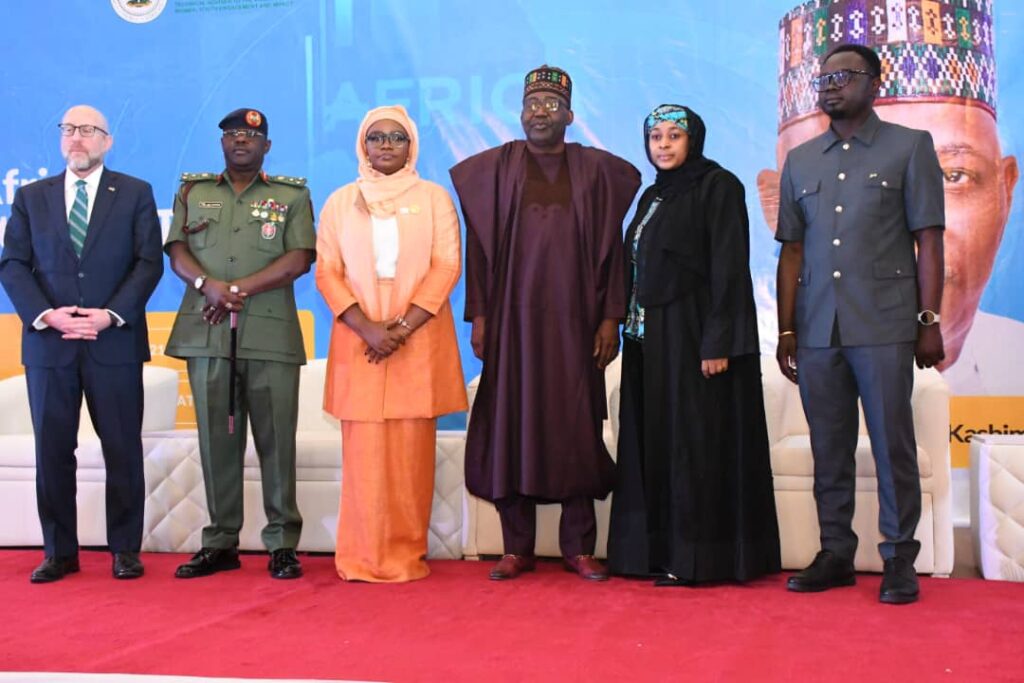
Vice President Kashim Shettima has reiterated the federal government’s commitment to empowering Nigerian youth, positioning them as key players in the nation’s development strategy and in Africa’s broader integration goals. Speaking on Thursday during the 2024 Youth Legacy Conference at the Banquet Hall of the Presidential Villa in Abuja, VP Shettima emphasized the importance of bridging generational divides and empowering youth as anchors of today’s progress.
Represented by the Deputy Chief of Staff to the President (Office of the Vice President), Senator Ibrahim Hassan Hadejia, VP Shettima highlighted the central role of young Nigerians in President Bola Ahmed Tinubu’s “Renewed Hope” agenda. He stressed that no nation can thrive without investing in its youth, noting, “They are not just leaders of tomorrow; they are the anchors of today.”
The theme of the conference, “Shaping Africa’s Future with AfCFTA and Agenda 2063,” underscored the alignment of Nigeria’s youth-focused initiatives with Africa’s long-term development strategies. Shettima noted that the African Continental Free Trade Area (AfCFTA) and Agenda 2063 present significant opportunities for young Nigerians to flourish as innovators, entrepreneurs, and leaders in a rapidly changing global economy.
“AfCFTA is not just about trade; it is about creating opportunities for our youth to connect, innovate, and lead Africa into a new era of prosperity,” said Shettima. He also commended initiatives like the Mandela Washington Fellows for their outstanding leadership in various sectors, citing their impact in education, healthcare, and social justice as an example of what young Africans can achieve when given the tools to succeed.
A key moment in the conference was the launch of the Ubuntu Trade App, a digital innovation aimed at enhancing Africa’s trade integration and market access for young entrepreneurs. Describing it as “a testament to the genius of our young minds,” Shettima praised the app as a crucial step in Africa’s digital transformation and in empowering youth to reshape industries and connect markets.
Shettima also stressed the administration’s proactive approach to including youth in governance and critical sectors. “Our engagement with the youth is not symbolic; it is a necessity. You are not spectators; you are architects of the future,” he remarked, reaffirming the government’s commitment to youth involvement in shaping Nigeria’s future.
The event also saw the participation of various dignitaries, including the United States Ambassador to Nigeria, Richard M. Mills, who emphasized the importance of building networks across Africa to enhance trade, ideas, and human connections. Mills, represented by the U.S. Embassy’s Deputy Chief of Mission, David J. Greene, commended the Nigerian government’s support for the event and highlighted the role of programs like the Mandela Washington Fellowship in fostering young leadership across the continent.
In her address, Hajiya Hauwa Liman, Technical Adviser to the Vice President on Women, Youth Engagement, and Impact, emphasized the critical role of the youth in reshaping Africa’s economic future. She highlighted the demographic advantage of Africa’s youthful population and the potential it holds to propel the continent towards a more prosperous, integrated, and peaceful future.
The President of the Mandela Washington Fellowship Alumni Association of Nigeria (MWFAAN), Ms. Farida Yahaya, also spoke at the event, reflecting on the positive impact of the fellowship in empowering young Africans to drive change in their communities. She underscored the importance of mentorship, innovation, and the continued dedication of the alumni in creating a better Nigeria and Africa.
The conference concluded with a renewed sense of optimism about the role of Nigeria’s youth in driving Africa’s economic transformation, with the leadership and innovation of young people poised to steer the continent toward greater prosperity and unity.
