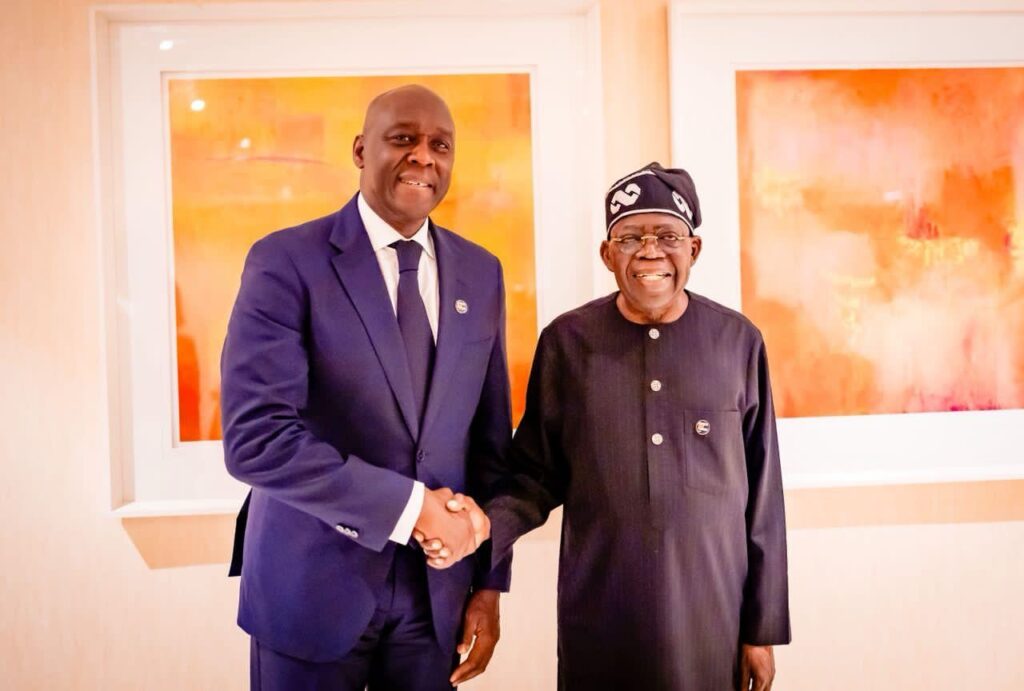
The International Finance Corporation (IFC) has announced plans to dispatch a team to Nigeria to explore scalable investment structures aimed at unlocking private capital in key sectors, including livestock, energy, and housing.
The Managing Director of the IFC, Diop Makhtar, disclosed this in Kigali, Rwanda, on Thursday during a meeting with President Bola Ahmed Tinubu on the sidelines of the 13th Africa CEO Summit.
Makhtar said the delegation would assess modalities for deeper collaboration with Nigeria in critical development areas, while also seeking investment frameworks capable of expanding private-sector participation in the economy.
He was accompanied by senior IFC officials, including Ethiopis Tafara, Regional Vice President for Africa, and Dahlia Khalifa, Director for Central Africa and Nigeria. He praised Nigeria’s recent reform efforts, particularly the removal of fuel subsidy and exchange rate harmonisation, describing them as bold and transformative measures that signal stronger investor confidence.
“President Tinubu, you have been so courageous in removing the subsidy. When you did it, I said to myself, President Tinubu took the bull by the horns,” Makhtar said.
President Tinubu, in response, reaffirmed Nigeria’s commitment to mobilising private capital for national development, stressing the importance of positioning African pension funds as strategic instruments for infrastructure financing.
He noted that African leaders and the private sector must prioritise the mobilisation of domestic institutional capital to support infrastructure development, energy transition, and long-term economic transformation across the continent.
According to him, achieving Africa’s development goals requires stronger focus on decentralised energy systems, improved transmission infrastructure, and enhanced regional interconnectivity to attract private investment.
“If you want Africa to leapfrog, then energy transmission and decentralisation are important. The funding gap is there, and we must work together,” the President said.
The meeting also explored mechanisms for leveraging institutional investors, local currency financing, and currency swap arrangements to deepen infrastructure funding and improve regional trade integration.
Makhtar further noted that partnerships with African financial institutions, including Access Bank, could strengthen cross-border financial integration and support economic cooperation across the continent.
Both parties emphasized the need for stronger African institutions and regional economic champions to drive what was described as an “African Renaissance” focused on sustainable growth and shared prosperity.
