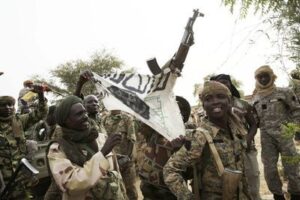
The Observatory for Religious Freedom in Africa (ORFA) has released a new report indicating that 79,323 people were killed and 34,773 civilians abducted in terrorism-related violence across Nigeria between 2020 and 2025, highlighting what it describes as the devastating human cost of the country’s prolonged security crisis.
The report, titled “Four Times Boko Haram? How the World Misreads Nigeria’s Violence,” was unveiled in Jos and presents findings from a six-year study of violent attacks across the country.
According to ORFA, the research is based on an extensive review of documented incidents, casualty records and attack patterns collected over the period. The organisation said the report seeks to provide a broader understanding of the dynamics driving insecurity in Nigeria and to challenge widely held assumptions about the principal actors behind the violence.
According to the report, a total of 79,323 people lost their lives during the six-year period, while 34,773 civilians were abducted by armed groups operating in different parts of the country. ORFA further stated that more than 42,000 of those killed were civilians, underscoring the heavy toll the violence has taken on non-combatants.
The report estimates that Nigeria experienced an average of seven violent attacks every day between 2020 and 2025, resulting in approximately 36 deaths daily.
ORFA said the figures illustrate the persistent and widespread nature of insecurity affecting several regions of the country despite ongoing military operations and government efforts to restore peace.
One of the central arguments of the report is that public discourse has largely focused on Boko Haram and the Islamic State West Africa Province (ISWAP), while overlooking the role of other armed groups in the country’s insecurity. According to ORFA’s analysis, Boko Haram accounted for about eight per cent of civilian deaths recorded during the study period, while ISWAP was responsible for approximately four per cent.
The organisation contends that armed groups it describes as “Fulani Terror Groups” were responsible for a significantly larger proportion of civilian killings and abductions during the period under review. ORFA, however, emphasised that the term refers specifically to armed groups involved in violent activities and should not be interpreted as referring to the Fulani ethnic community as a whole. It stressed that the designation is intended to distinguish armed actors from the broader Fulani population, the overwhelming majority of whom are law-abiding citizens.
According to ORFA, accurately identifying the various actors involved in Nigeria’s security crisis is essential for developing effective responses. The report argues that misunderstanding the nature of the violence could hinder efforts by policymakers, security agencies, humanitarian organisations and international partners to address the underlying causes of insecurity.
The report also highlights the humanitarian consequences of the violence, noting that repeated attacks have displaced thousands of families, disrupted farming activities, destroyed livelihoods and worsened food insecurity in many communities. It states that prolonged insecurity has placed additional pressure on humanitarian agencies working to provide relief for internally displaced persons and vulnerable populations.
ORFA called on the Nigerian government to strengthen intelligence gathering, improve coordination among security agencies and enhance the protection of vulnerable communities. It also urged greater investment in early warning systems, community engagement initiatives and victim support programmes aimed at addressing the long-term effects of violent conflict.
In addition, the organisation appealed to the international community to broaden its understanding of Nigeria’s security challenges and ensure that policy responses are informed by comprehensive evidence rather than narrow assumptions.
It said international support should prioritise civilian protection, humanitarian assistance and initiatives that promote lasting peace and stability.
The report has contributed to ongoing discussions among security experts, policymakers and civil society organisations regarding the changing nature of violence in Nigeria. While the findings are expected to inform future debates on security policy, some analysts have noted that ORFA’s conclusions, methodology and classifications are likely to be examined and debated within academic and policy circles.
Nigeria has continued to grapple with multiple security challenges in recent years, including insurgency in the North-East, banditry in the North-West, farmer-herder conflicts in the North-Central, separatist-related violence in parts of the South-East and kidnapping for ransom across several regions. These overlapping threats have prompted repeated calls for reforms in the country’s security architecture and stronger collaboration among federal, state and local authorities.
As debates over the report continue, ORFA maintains that its findings are intended to encourage evidence-based policymaking and improve understanding of the complex drivers of violence across Nigeria. The organisation expressed hope that the report would contribute to more effective strategies for protecting civilians, preventing attacks and restoring peace to communities affected by years of conflict. Visit www.jocomms.com for more news.
