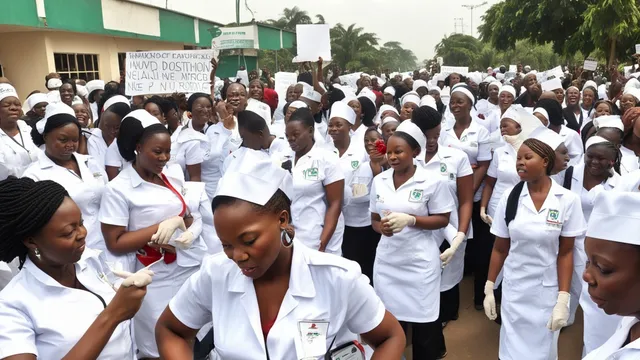
In a move that will severely affect healthcare delivery across Nigeria, approximately 25,000 nurses, under the National Association of Nigeria Nurses and Midwives (NANNM), Federal Health Institutions Sector, have commenced a seven-day warning strike starting today. The action is in response to unresolved grievances concerning poor working conditions, inadequate compensation, and a shortage of staff within Nigeria’s healthcare system.
The strike follows the expiration of a 15-day ultimatum issued by the union to the federal government, which failed to initiate any substantial negotiations or address the nurses’ concerns.
Strike Impact: Healthcare Facilities to Face Total Shutdown
The strike, which commenced at midnight, will see a total withdrawal of services in 74 federal hospitals, including teaching hospitals, specialist centres, and primary healthcare institutions. These facilities span across all 36 states and the Federal Capital Territory (FCT), as well as 774 local government areas. However, private hospitals are not affected by the strike due to the limited number of nurses employed in the private sector.
Morakinyo Rilwan, National Chairman of NANNM-FHI, spoke to Daily Trust, stating, “The action would involve all federal health institutions, and it will be a total shutdown. There will be no emergency services, including those in operating theatres, intensive care units, and outpatient clinics.”
The nurses’ primary concerns include poor remuneration, unsafe working conditions, unpaid allowances, and the growing staff shortages exacerbated by the ‘Japa syndrome,’ referring to the migration of healthcare professionals abroad for better opportunities. Rilwan highlighted that approximately 10,000 nurses are currently unemployed in Nigeria, adding to the workload of those still in the country.
Unmet Demands and Government Inaction
The union’s demands include the immediate gazetting of the nurses’ scheme of service, the implementation of a 200% increase in allowances, employment of more nurses, and better representation of nurses in health policy-making bodies. Despite issuing a 15-day ultimatum on July 14, 2025, the NANNM reported that the federal government failed to engage in meaningful discussions, prompting the strike.
“We have been appealing to the government not to let us reach this point,” Rilwan said. “But they have been adamant, and now it’s unavoidable.”
Historical Context: A Long-Awaited Action
Rilwan also noted that this is the first nurses’ strike in Nigeria in over 40 years, with the last one occurring in 1984. Despite the historical absence of strike action by nurses, the union has been left with no option but to take this drastic step to draw attention to their concerns.
“We don’t want this to escalate further, but the government has remained indifferent,” Rilwan added. “If no concrete action is taken after this seven-day strike, we will issue another 21-day ultimatum before considering an indefinite strike.”
Widespread Repercussions: A Health Crisis in the Making
The strike comes at a time when doctors in Lagos State are also on a three-day warning strike, exacerbating the strain on Nigeria’s already overstretched healthcare system. Experts have raised concerns about the impact of simultaneous strikes by these critical healthcare professionals.
Rukayat Hassan, a medical practitioner, called the situation a “slap on the government’s face,” emphasizing the crucial need for timely resolution of the issues affecting the healthcare sector. “It is high time the government considered the masses and addressed these issues, especially as private hospitals are not an option for many due to their high costs,” Hassan said.
Nurses Demand Recognition and Better Treatment
One nurse, Oyekanmi Blessing, expressed frustration over the lack of respect and dignity afforded to nurses in Nigeria compared to their colleagues abroad. “Our only crime is staying in Nigeria to care for Nigerians,” Blessing lamented, pointing out the stark contrast in the treatment of Nigerian nurses working in countries like Saudi Arabia.
The nurses are also demanding a 200% increase in allowances, citing that their current pay does not reflect the demands of their profession or the level of commitment required. “The government must act now to prevent further deterioration in the health sector,” said Adeniyi Kolawole, a medical practitioner. “It’s not surprising that government officials seek treatment abroad when our healthcare workers are in such dire conditions.”
Government’s Response
The federal government, through the Ministry of Health, has yet to respond meaningfully to the situation, with Alaba Balogun, Head of Information & Public Relations, requesting a WhatsApp message for further comment but failing to reply by the time of publication.
As the strike continues, patients are expected to face severe disruptions, with emergency services being the most affected. Healthcare professionals and experts alike are calling on the government to prioritize urgent reforms in Nigeria’s healthcare system to avoid a full-blown crisis.