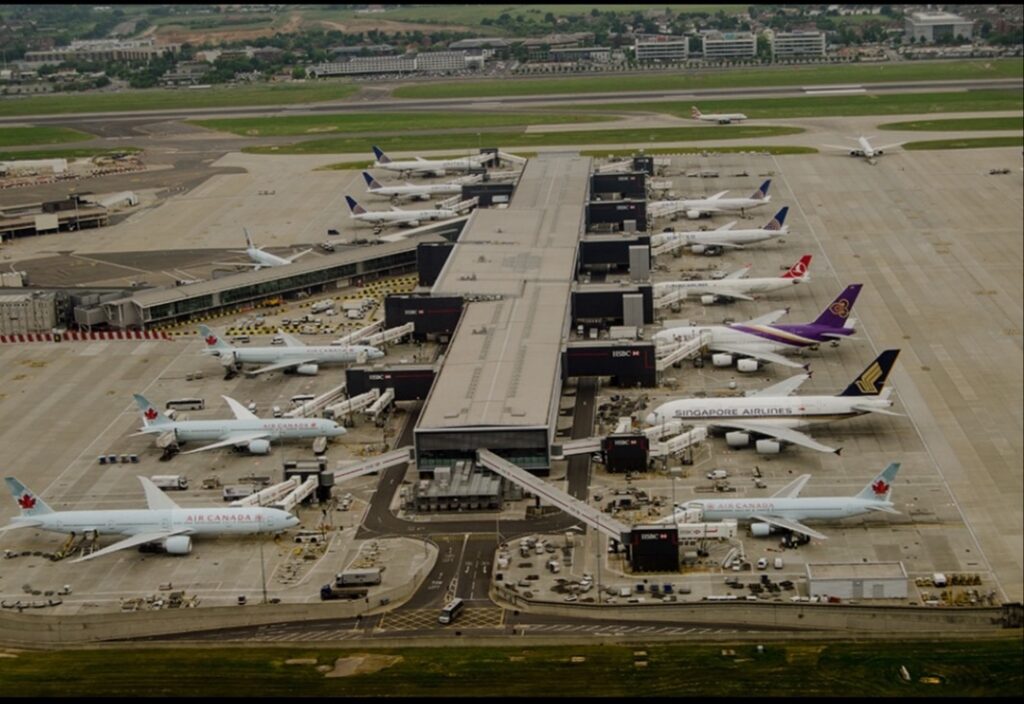
Heathrow Airport has announced a landmark £49 billion expansion plan aimed at dramatically increasing its capacity and modernising its infrastructure, marking one of the most significant infrastructure projects in UK history.
Fully financed by private investment, the plan includes the construction of a long-debated third runway, the development of a new terminal, and a comprehensive upgrade of existing airport facilities. If implemented, the expansion could nearly double Heathrow’s annual passenger capacity from 84 million to 150 million and increase flight movements from 480,000 to approximately 756,000.
Third Runway and Infrastructure Overhaul
At the heart of the proposal is a 3,500-metre third runway to be constructed northwest of the existing terminals. This element alone is expected to cost £21 billion, with completion anticipated within the next decade.
In addition to the runway, Heathrow plans to build a new terminal provisionally named T5X at a cost of £12 billion. A further £15 billion will be allocated to upgrade and modernise existing infrastructure, including a phased closure of Terminal 3 and improvements to Terminal 2.
These developments are designed to enhance passenger experience, improve efficiency, and accommodate growing international demand for air travel to and from the UK.
Government Backing and Timeline
The Labour government formally endorsed Heathrow’s expansion in January 2025. Chancellor Rachel Reeves and Transport Secretary Heidi Alexander have both framed the project as essential to the UK’s long-term economic growth and global competitiveness.
The airport is expected to submit a Development Consent Order (DCO) by 2028. Subject to planning approval and construction schedules, the full expansion could be operational by 2035.
Environmental and Political Opposition
Despite political backing, the project has ignited significant controversy among environmental groups and local leaders. London Mayor Sadiq Khan has reiterated his opposition, warning that the expansion would increase air and noise pollution and jeopardise London’s climate commitments.
Environmental organisations argue that offsetting the increased carbon emissions would require planting around 300,000 hectares of trees an area twice the size of Greater London by 2050. A recent report presented to Parliament estimated the carbon abatement cost could exceed £100 billion, double previous projections.
Industry Concerns Over Cost
Airline groups have also expressed concern. International Airlines Group (IAG), owner of British Airways, has cautioned that rising airport charges could make Heathrow one of the most expensive airports globally, potentially deterring passengers and airlines from using the new capacity.
IAG instead supports a rival plan by the Arora Group, which proposes a shorter, more cost-effective runway that avoids major disruptions such as the rerouting of the M25 motorway. That plan, estimated at around £25 billion, is also under review by government officials.
Looking Ahead
Heathrow’s expansion plan represents a bold vision for the future of British aviation, promising job creation, enhanced global links, and long-term capacity growth. However, it must now navigate intense public scrutiny, environmental accountability, and industry pushback as it moves through the next stages of regulatory and planning approval.
Further updates are expected as consultations and planning processes unfold in the coming years.
