By Usman Ishaq Shehu
Technical Assistant, Presidential Office of Digital Engagement and Strategy
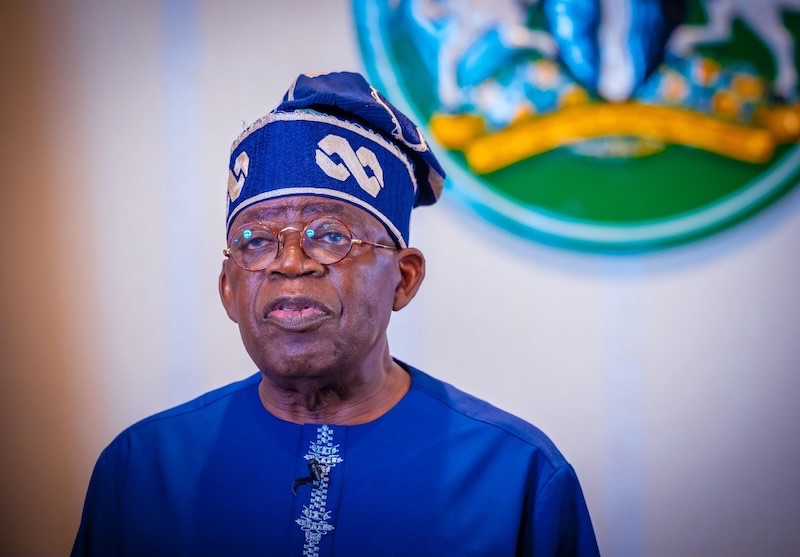
Three years into the administration of President Bola Ahmed Tinubu, Nigeria stands at a defining point in its political economy. The period has been shaped by difficult but deliberate choices, far-reaching reforms, and a sustained effort to recalibrate the foundations of governance and economic management.
Assuming office amid fiscal strain, foreign exchange volatility, mounting debt pressures, and elevated public expectations, the administration opted early for structural correction over gradual adjustment.
Fiscal Reform and Revenue Re-engineering
At the centre of this period is a clear shift in fiscal management and revenue administration.
According to the Executive Chairman of the Nigeria Revenue Service, Dr. Zacch Adelabu Adedeji, improvements in remittance systems, transparency frameworks, and oversight mechanisms have strengthened fiscal governance.
In May 2023, Federation revenue stood at approximately ₦711 billion. By September 2025, it had risen to ₦3.635 trillion, representing a 411 percent increase. Beyond the figures lies a deeper signal of institutional re-engineering and improved fiscal coordination.
Macroeconomic Realignment
The administration’s economic direction has been anchored on three major decisions: fuel subsidy removal, foreign exchange unification, and tax system reforms.
These measures, while difficult in the short term, represent a decisive break from long-standing distortions in the economy. The administration has consistently argued that such reforms are necessary to restore long-term stability and credibility.
Agriculture, Energy Transition and Productive Sectors
In agriculture, interventions in mechanised farming, fertilizer distribution, and food security programmes are aimed at strengthening domestic production and reducing import dependence.
The Compressed Natural Gas initiative has also emerged as a key element of the post-subsidy transition, offering a more affordable and cleaner alternative for transport and logistics.
Trade, Social Protection and Diplomacy
Efforts in trade and industry have focused on improving port efficiency, easing logistics bottlenecks, and expanding non-oil export capacity.
Social intervention programmes, including conditional cash transfers and targeted household support, have been expanded to cushion vulnerable Nigerians.
Diplomatically, Nigeria has strengthened engagement within ECOWAS and global partnerships, with renewed emphasis on investment attraction and regional integration.
Infrastructure Delivery and 3rd Anniversary Commissioning
The administration’s third anniversary was marked by the commissioning of strategic infrastructure projects across key sectors.
Education: TETFund Intervention and Expansion
Under the banner of President Tinubu Commissions TETFund-Funded Education Projects Across Nigeria, new academic infrastructure was unveiled.
- New Classroom Complex, Hussaini Adamu Federal Polytechnic, Kazaure (TETFund Special High Impact Intervention)
The project addresses infrastructure gaps, improves learning conditions, and expands access to technical education.
Healthcare System Strengthening
Major health sector projects commissioned include:
- Trauma Centre Pharmacy QC Laboratory, ABU Teaching Hospital, Zaria
- Aboh Primary Health Care Centre, Delta State
- University of Nigeria Teaching Hospital, Enugu (Administrative Complex)
- University of Maiduguri Teaching Hospital (Mental Health Complex)
- Deployment of 73 CNG-powered ambulances nationwide
- Emergency Operations Centres in Sokoto, Kano, and Katsina States
These investments aim to strengthen emergency response systems and expand healthcare access nationwide.
Energy and Industrial Development
- Ibile Oil & Gas CNG Station, Ojota, Lagos
- MDGIF-supported CNG infrastructure projects
- Industrial Development Centre, Ikorodu, Lagos State
These reflect a dual focus on clean energy transition and industrial productivity.
Education Stability and Human Capital
Through the Nigerian Education Loan Fund, access to tertiary education financing has widened significantly.
Perhaps more quietly impactful has been the relative stability in public university academic calendars.
From a national standpoint, this stability is deeply significant, as uninterrupted academic cycles improve learning outcomes and institutional efficiency in tertiary education, which in previous years were often disrupted by prolonged industrial actions and administrative delays.
Workers’ Welfare and Security
The approval of a ₦70,000 national minimum wage reflects efforts to adjust workers’ welfare in line with prevailing economic realities.
Security operations continue against terrorism, banditry, kidnapping, and oil theft, with emphasis on coordination and intelligence-led response.
Local Government Reform
A key governance development has been the renewed push for local government autonomy, aimed at strengthening grassroots administration and improving service delivery.
A Nation in Structural Transition
Three years on, Nigeria’s policy direction reflects a clear commitment to reform, fiscal discipline, and institutional strengthening.
The administration has chosen a difficult but deliberate path, prioritising long-term correction over short-term comfort. The effects of these choices continue to unfold across economic, social, and governance systems.
Ultimately, history will deliver the final verdict. But for now, the record reflects a country undergoing structural transition, adjusting, reforming, and steadily redefining its future trajectory.
