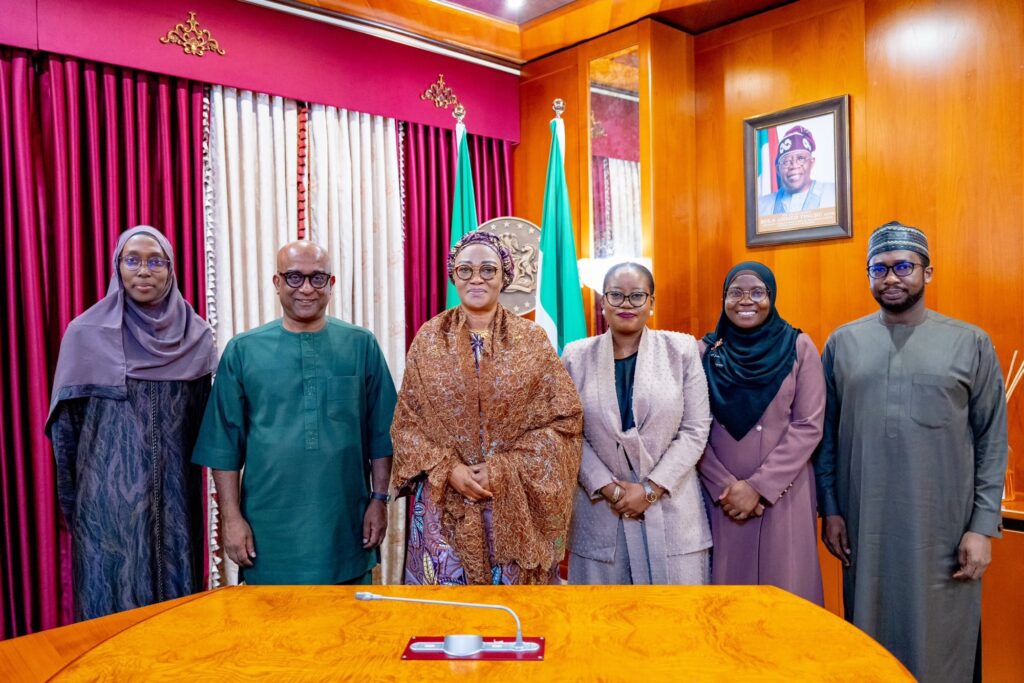

First Lady of Nigeria, Senator Oluremi Tinubu, has reaffirmed the Federal Government’s commitment to investing in early childhood development, describing it as essential to improving children’s growth, education and future opportunities.
Speaking during a meeting with a delegation from the World Bank at the State House, Abuja, the First Lady said the administration remains committed to policies and programmes that promote national development and improve the well-being of Nigerians.
She highlighted Nigeria’s large population as a strategic advantage and commended the efforts of various ministries in advancing initiatives in environmental sanitation, public health, education and child welfare.
Senator Tinubu said her office would continue working with the wives of state governors to drive interventions aimed at improving the lives of children across the country, including strengthening school feeding programmes, which she noted are a priority for President Bola Ahmed Tinubu’s administration.
The World Bank delegation, led by its Country Director for Nigeria, Dr. Matthew Verghis, called for stronger collaboration with Nigerian leaders to advance the Early Childhood Development (ECD) programme.
Verghis described investment in early childhood development as one of the most important long-term investments any country can make, noting that interventions from pregnancy to age five significantly improve cognitive development, health outcomes and long-term economic productivity.
He said Nigeria remains one of the World Bank’s most important partners globally and stressed that the country’s success is critical to achieving the institution’s targets in healthcare, education, nutrition, energy access and digital connectivity.
The World Bank also commended the alignment between the First Lady’s initiatives, particularly her campaign against child malnutrition, and the bank’s priorities, expressing confidence that closer collaboration would accelerate implementation of programmes designed to improve the lives of Nigerian children over the next five years.
