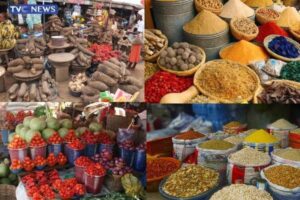
Food prices across Nigeria have remained high despite a slight decline in the country’s headline inflation rate, leaving many households struggling with the rising cost of living.
According to the National Bureau of Statistics (NBS), headline inflation eased marginally to 15.91 per cent in June 2026, from 15.93 per cent in May. However, food inflation continued to rise on a month-on-month basis, increasing to 3.75 per cent in June from 2.98 per cent recorded in May.
Across major markets, consumers and traders report that the prices of staple foods, including rice, beans, tomatoes, yam and vegetable oil, remain elevated.
Traders attribute the persistent increase to high transportation costs, insecurity affecting agricultural production, and rising input costs.
Economic analysts explained that a decline in the inflation rate does not mean prices have fallen. Rather, it indicates that prices are still increasing, but at a slower pace than in previous months.
They noted that while the moderation in headline inflation is a positive signal for the economy, Nigerians may not experience immediate relief from high food prices, as structural challenges continue to put pressure on food supply and distribution.
The sustained increase in food prices continues to erode household purchasing power and remains one of the biggest economic challenges facing millions of Nigerians. Visit www.jocomms.com for more news.