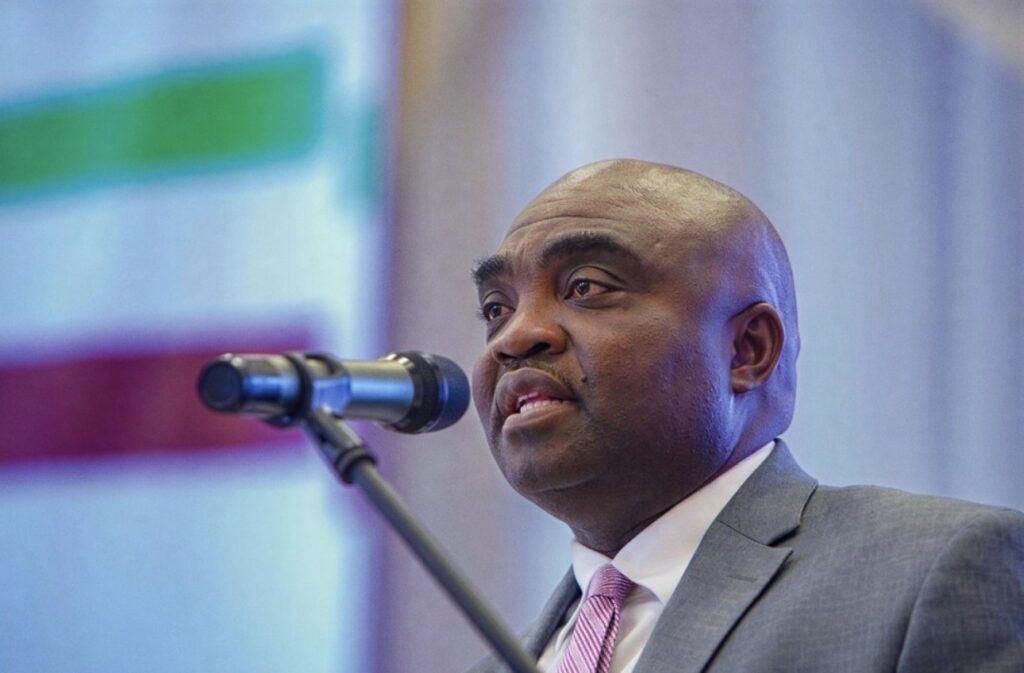
Nigeria has strengthened its pitch as a leading destination for infrastructure investment, unveiling a multi-trillion-naira pipeline of Public Private Partnership (PPP) projects at a high-level infrastructure dialogue held alongside the IMF and World Bank Spring Meetings.
The Director General of the Infrastructure Concession Regulatory Commission (ICRC), Dr. Jobson Oseodion Ewalefoh, told participants at the Global Infrastructure Facility session that Nigeria is actively repositioning its economy to attract large-scale private capital for infrastructure development.
He said the reform agenda under President Bola Ahmed Tinubu, anchored on the Renewed Hope framework, is focused on turning policy commitments into executable projects capable of attracting global investors.
According to him, Nigeria is not only reforming its PPP framework but also building a visible and structured pipeline of bankable projects across critical sectors.
Recent Federal Executive Council approvals, he disclosed, include PPP projects worth over ₦6.43 trillion, covering the Bakassi Deep Seaport, Ondo Deep Seaport, and the 460MW Katsina Ala Hydropower Plant, all structured for private sector funding and delivery.
He added that ongoing concessions in the maritime sector, including Apapa, Tin Can Island, and Onne ports, have already demonstrated the effectiveness of PPP arrangements in improving operational efficiency and attracting investment.
Dr. Ewalefoh also pointed to transport and aviation projects such as the Lagos-Ibadan corridor and Murtala Muhammed Airport Terminal 2 as evidence that PPPs in Nigeria are already delivering measurable outcomes.
He, however, noted that the “project preparation gap” remains a major global challenge, particularly for developing economies, where many projects fail to reach financial close due to weak structuring at early stages.
Nigeria, he said, is addressing this challenge through improved project development frameworks, stronger transaction advisory systems, and more standardised processes designed to increase investor confidence and reduce delays.
He further stressed that infrastructure financing must evolve globally to reflect the realities of emerging markets, calling for more flexible, adaptive models rather than rigid one-size-fits-all structures.
With Nigeria’s infrastructure deficit estimated at about $2.3 trillion between 2020 and 2043, the government, he explained, is prioritising private sector participation as the main driver of infrastructure financing.
He reaffirmed that the country’s PPP framework is anchored on regulatory certainty, transparent procurement, and contract sanctity, which he described as key to reducing risk and improving investor trust.
Nigeria is also intensifying collaboration with global financing platforms such as the Global Infrastructure Facility to expand its project pipeline and connect it with long-term international capital.
Officials say the country’s message to global investors remains consistent: Nigeria is open for infrastructure business, and the pipeline is ready.
