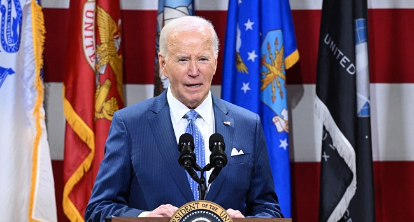
In a landmark decision, U.S. President Joe Biden has imposed a sweeping ban on offshore drilling across vast coastal waters, including the entire Atlantic coast, the eastern Gulf of Mexico, the Pacific coasts of California, Oregon, and Washington, and portions of Alaska’s Bering Sea. The move, announced on Monday, safeguards more than 625 million acres (253 million hectares) of ocean, according to a White House statement.
“As the climate crisis continues to threaten communities across the country and we transition to a clean energy economy, now is the time to protect these coasts for our children and grandchildren,” Biden stated. He emphasized that the limited fossil fuel potential in these areas does not justify the environmental and economic risks of new drilling operations.
The ban, enacted under the Outer Continental Shelf Lands Act of 1953, is indefinite and could pose legal and political challenges for the incoming Trump administration, which has vowed to expand fossil fuel production. The law does not explicitly allow presidents to reverse such bans without Congressional approval, complicating efforts to overturn the decision.
Environmental groups have celebrated the ban as a major victory. Joseph Gordon, Climate and Energy Director at Oceana, hailed it as an “epic ocean victory,” noting the protection of coastal communities for future generations.
The White House added that with this action, Biden has conserved more than 670 million acres of U.S. lands, waters, and ocean—more than any president in history.
However, the move drew sharp criticism from Trump’s team. Incoming press secretary Karoline Leavitt described it as a “disgraceful decision designed to exact political revenge on the American people,” accusing Biden of undermining Trump’s mandate to increase domestic fossil fuel production and lower gas prices.
The drilling ban is part of a series of ambitious climate initiatives by the Biden administration in its final weeks. In December, the administration committed to an ambitious climate target under the Paris Agreement, aiming to reduce greenhouse gas emissions by 61-66% below 2005 levels by 2035, with a goal of net-zero emissions by 2050.
As Biden’s term concludes, the offshore drilling ban solidifies his administration’s commitment to combating climate change, despite anticipated pushback from the Trump administration and the fossil fuel industry.
