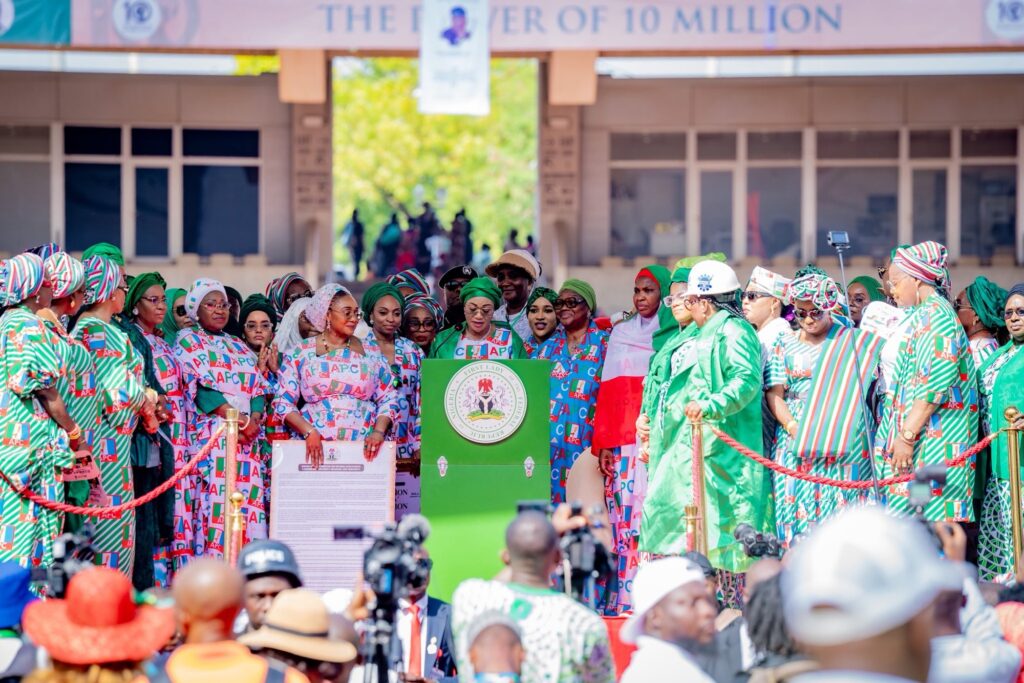
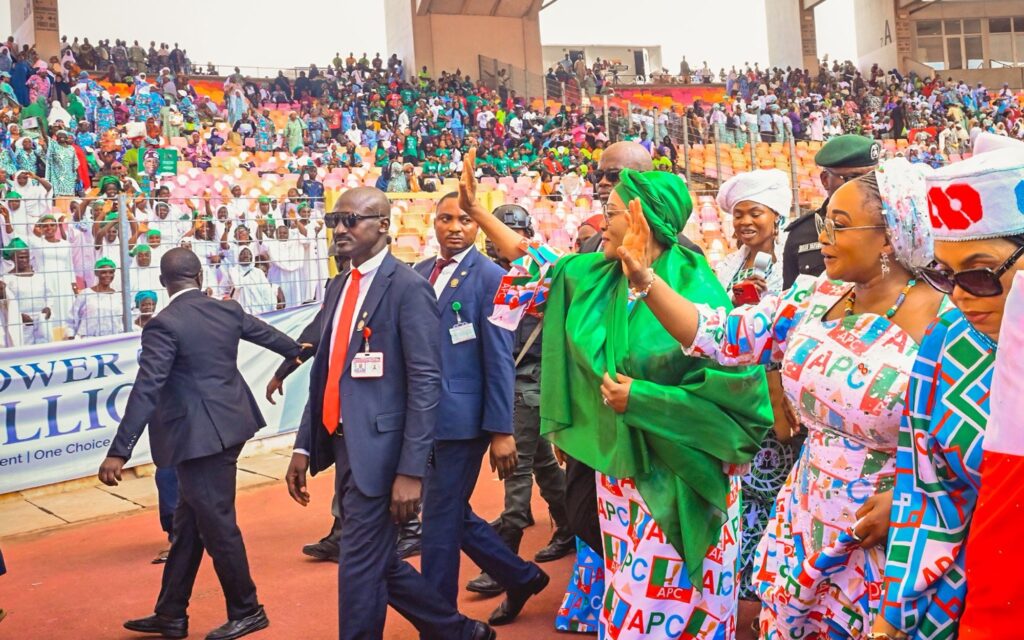
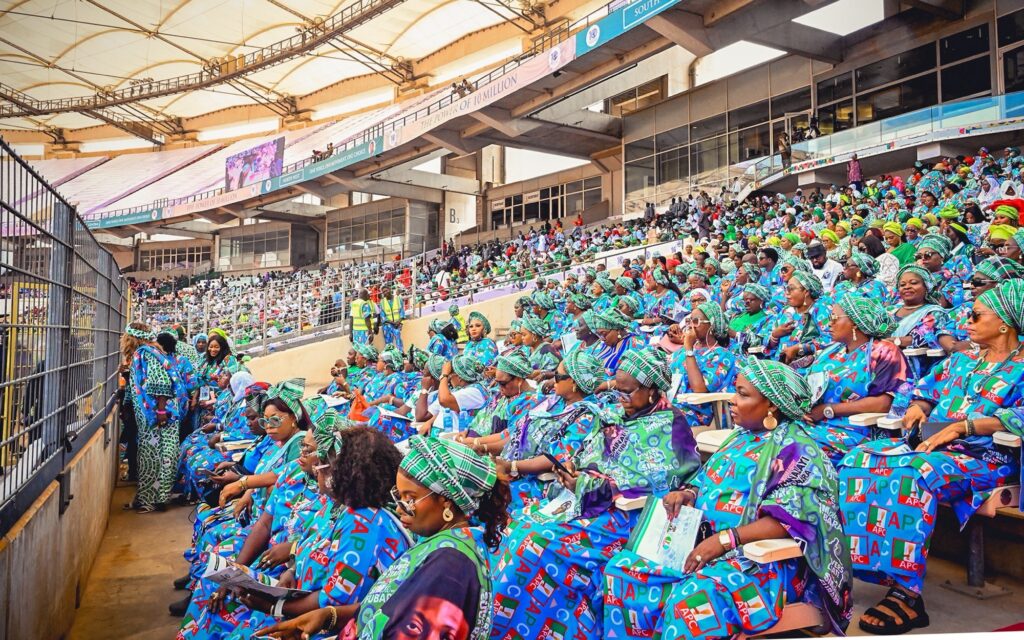
The First Lady of Nigeria, Senator Oluremi Tinubu, on Tuesday attended the National Women Mega Empowerment and Rally held at the Moshood Abiola Stadium in Abuja, where she reaffirmed the importance of women in driving national development.
She noted that women, who make up over half of Nigeria’s population, remain central to the country’s progress and are well positioned to contribute meaningfully to governance, economic growth, and social development. She also commended the Minister of Women Affairs and Social Development, Imaan Sulaiman-Ibrahim, for her commitment to advancing women-focused empowerment programmes across the country.
Senator Tinubu emphasized that empowering women to make informed decisions would strengthen families and communities, aligning with the Renewed Hope Agenda of President Bola Ahmed Tinubu, which promotes inclusion and expanded participation of women in leadership and governance.
Reiterating the President’s message, she said, “When Nigerian Women Rise, Nigeria Rises,” adding that the administration remains committed to supporting initiatives that uplift women and improve their welfare. She also received the Women’s Charter for National Development and assured that it would be forwarded to the President for consideration.
The First Lady further urged women to uphold strong family values and remain committed to raising responsible children, describing this as essential to building a stable and prosperous society.
In her remarks, the Minister of Women Affairs and Social Development described the rally as a unifying platform for women nationwide. She also highlighted the “Power of 10 Million Women” initiative, designed to strengthen women’s participation in governance and development processes.
A major highlight of the event was the presentation of the Women’s Charter for National Development, which outlines key priorities such as increased political inclusion, expanded economic opportunities, and improved welfare for women and children.
The programme also featured the symbolic distribution of empowerment items, including tricycles, power tillers, sewing machines, grinding machines, hair dryers, and freezers to selected women beneficiaries.
