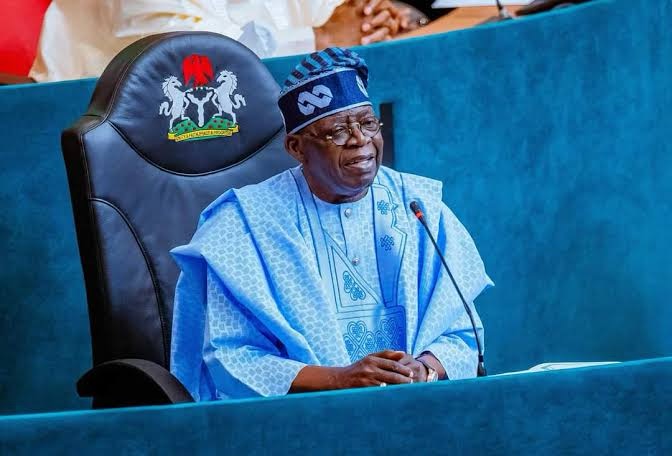
President Bola Ahmed Tinubu has said Nigeria has “stabilised and is moving forward again” under his administration, as he marked the third anniversary of his presidency on May 29, 2026, outlining major economic reforms, infrastructure expansion, and social intervention programmes.
In a nationwide address, the President reflected on what he described as difficult but necessary policy decisions taken since assuming office in 2023, including the removal of fuel subsidies and foreign exchange reforms, which he said were aimed at preventing fiscal collapse and restoring long-term economic stability.
He noted that the country previously faced severe economic pressures, including high subsidy costs, forex distortions, rising debt servicing obligations, and declining public revenues. According to him, subsidy payments had reached about ₦18.4 billion daily at their peak, while forex-related inefficiencies cost the nation trillions of naira over several years.
Economic performance and fiscal outlook
President Tinubu said the reforms had begun to yield results, pointing to improved investor confidence, stronger public finances, and increased revenues available to state and local governments.
He highlighted a major rally in the stock market, with the All Share Index reportedly rising from about 53,000 points in 2023 to 250,000 points in 2026, while market capitalisation increased from ₦30 trillion to ₦160 trillion within the same period.
He added that companies were recording stronger earnings and dividend payouts, describing it as evidence of renewed economic momentum.
Infrastructure and energy development
The President said more than 2,700 kilometres of roads and highways are currently under construction or rehabilitation nationwide, including major projects such as the Lagos–Calabar Coastal Highway, Sokoto–Badagry Super Highway, Abuja–Kaduna–Zaria–Kano Road, and sections of the East-West Road.
He also disclosed ongoing rail modernisation projects aimed at improving national connectivity and trade.
In the oil and gas sector, Tinubu said reforms had attracted fresh foreign investment, including progress on the $5 billion NLNG Train 7 project. He further noted increased domestic refining capacity and reduced reliance on imported petroleum products.
On the power sector, he said the administration is addressing longstanding debt and infrastructure challenges while investing in transmission upgrades and renewable energy expansion.
Social programmes and human capital development
The President outlined key social interventions, including agricultural support schemes targeting millions of farmers through inputs, mechanisation, and financing.
He also highlighted the Nigerian Education Loan Fund, which he said has supported over 1.5 million students with disbursements exceeding ₦282 billion.
In housing, he said more than 10,000 units are being developed across 14 states and the FCT under the Renewed Hope Housing Programme, alongside job creation linked to construction activities.
He added that healthcare facilities are being upgraded nationwide and health insurance coverage expanded for vulnerable groups.
Digital economy, youth and telecoms
Tinubu said efforts to stabilise the telecommunications sector were yielding results, with operators expanding infrastructure and investment.
He described young Nigerians as “the engine of Nigeria’s future,” noting government investments in digital skills, innovation, technical education, and entrepreneurship support.
Security situation
On security, the President said ongoing military and intelligence operations have intensified against terrorists, bandits, kidnappers, and oil thieves.
While acknowledging that challenges remain, he said several communities are becoming safer and economic activity is gradually returning in previously affected areas.
National message
Tinubu urged Nigerians to remain patient with ongoing reforms, insisting that the foundations for long-term recovery have been laid.
He said the government remains committed to reducing inflationary pressures, lowering transportation costs through CNG and electric vehicle adoption, and expanding job opportunities.
“The journey of national renewal is not completed in a single year or administration. Nations rise when their people remain united in purpose,” he said.
He called for unity across regions and religious divides, stressing that Nigeria’s diversity remains a strength.
Conclusion
The President reaffirmed his belief in Nigeria’s potential, saying the country is gradually emerging as a stronger and more stable economy.
“Let us continue this journey together,” he said, adding that Nigeria is on a path toward becoming “secure, prosperous, inclusive, and respected worldwide.”
