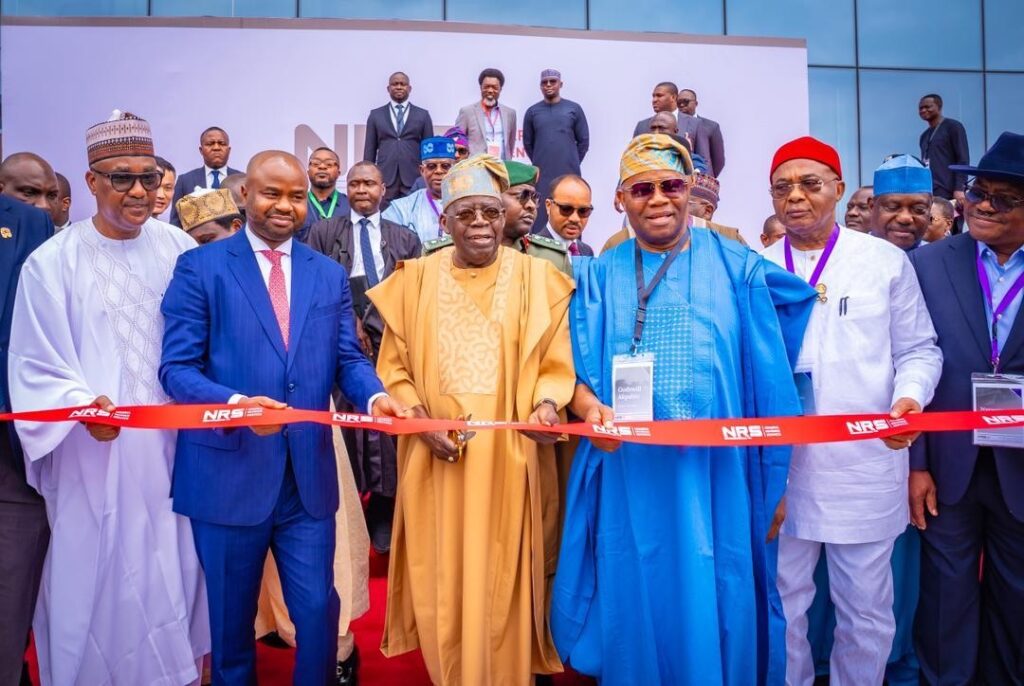
President Bola Ahmed Tinubu has said that colonial-era tax laws contributed to economic hardship in Nigeria due to fragmentation, multiplicity, and inconsistencies, adding that ongoing reforms are designed to deliver prosperity, inclusivity, and a more investment-friendly economy.
Speaking in Abuja at the commissioning of the 16-storey Nigeria Revenue Service (NRS) Headquarters, the President explained that the new tax system is people-centred and aimed at strengthening Nigeria’s fiscal foundation while making the economy more globally competitive.
He noted that the reforms are part of a broader effort to move the country away from outdated structures, improve efficiency, and build a transparent revenue system that supports growth, rewards enterprise, and ensures fairness.
President Tinubu reaffirmed that his administration’s fiscal and economic reforms are already producing positive results, including improved stability, stronger reserves, increased investor confidence, and a more efficient trade environment.
He commended the Executive Chairman of the NRS, Dr Zacch Adedeji, for the successful completion of the headquarters building within 30 months, describing it as a symbol of professionalism, transparency, and institutional renewal. He also praised the Minister of State for Finance, Taiwo Oyedele, for his role in modernising and simplifying the country’s tax framework.
The President urged the NRS to uphold accountability and efficiency, stressing that it must not only focus on revenue generation but also build public trust and ensure fairness in the system.
Senate President Godswill Akpabio and Speaker Tajudeen Abbas commended the reforms, urging Nigerians to remain patient, while noting improvements in economic coordination and stability.
The Executive Chairman of the NRS highlighted major revenue growth, improved fiscal governance, and the impact of recent reforms, including enhanced collections and the launch of the National Single Window to boost trade efficiency.
The event was attended by top government officials, lawmakers, private sector leaders, and development stakeholders, who all praised the administration’s ongoing economic reforms and institutional strengthening efforts.
