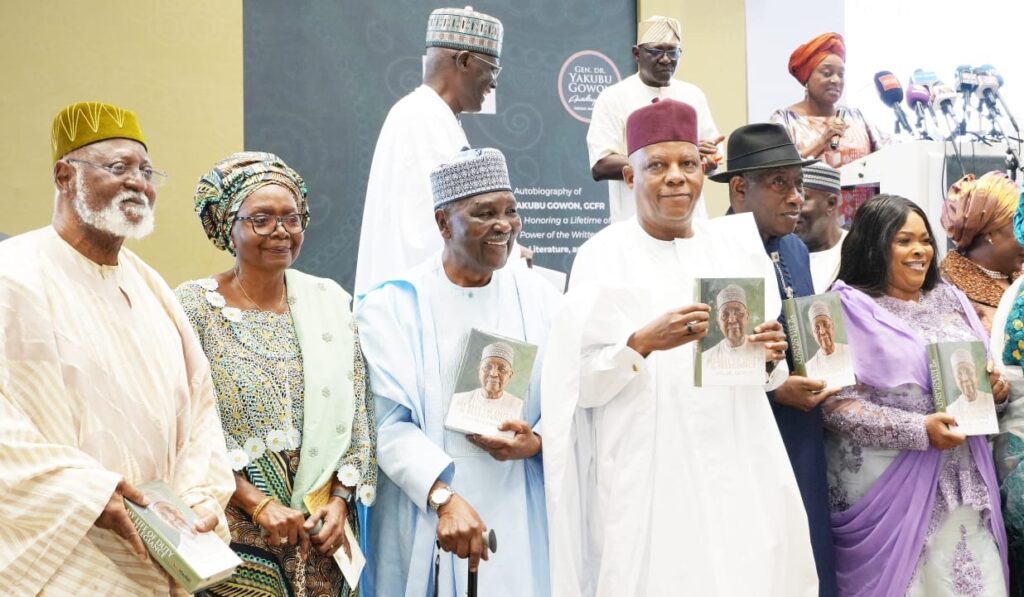
President Bola Ahmed Tinubu has described the autobiography of former Head of State, General Yakubu Gowon, as a significant national document that offers guidance for Nigeria’s future and reinforces the values of unity, reconciliation, and nation-building.
Speaking on Tuesday at the public presentation of the memoir held at the Bola Ahmed Tinubu International Conference Centre, Abuja, the President—represented by Vice President Kashim Shettima—said the reflections of leaders who witnessed critical moments in Nigeria’s history remain essential to strengthening democratic stability and national cohesion.
Tinubu stressed the importance of preserving historical memory, warning that nations that fail to learn from their past risk division and instability. He called for the widespread circulation of Gowon’s memoir, describing it as a “civic inheritance” for all Nigerians.
According to the President, the book arrives at a time when Nigeria and the West African region continue to face insecurity, economic pressures, and social fragmentation, making lessons of reconciliation and statesmanship even more relevant.
He commended Gowon’s post-civil war reconciliation philosophy of “No victor, no vanquished,” describing it as a defining principle that helped preserve Nigeria’s unity after the civil war. Tinubu added that national healing must be sustained through policies built on trust, inclusion, and shared citizenship.
He also highlighted the National Youth Service Corps (NYSC) as one of Gowon’s enduring legacies, noting its role in promoting unity by bridging ethnic, cultural, and religious divides across generations.
President Tinubu further stated that Gowon’s life stands as a rebuke to divisive narratives that attempt to reduce Nigeria’s diversity into rigid ethnic or religious stereotypes, emphasizing that national strength lies in unity and shared identity.
On regional cooperation, the President praised Gowon’s role in the founding of the Economic Community of West African States (ECOWAS), describing it as a vital platform for economic integration and collective security in West Africa. He said the bloc remains crucial in addressing terrorism, instability, and economic disruption across the sub-region.
General Gowon, in his remarks, said he wrote the memoir to tell his story and document Nigeria’s shared history, stressing that his life and that of the nation are deeply intertwined. He urged Nigerians to disregard “naysayers” ahead of future elections, expressing confidence in the country’s continued unity despite current challenges.
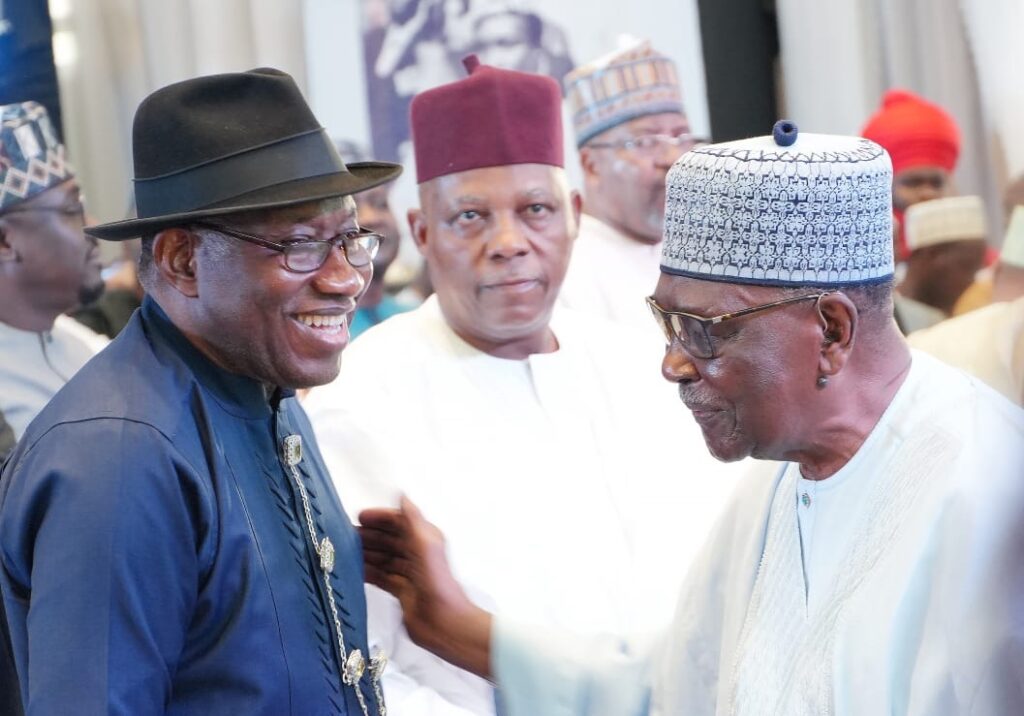
Former President Goodluck Jonathan, who chaired the occasion, described the memoir as a valuable reflection of Nigeria’s turbulent history and a contribution to preserving institutional memory for future generations.
In his review of the book, Bishop Matthew Kukah of the Catholic Diocese of Sokoto said the memoir provides important insights into Nigeria’s civil war era and Gowon’s leadership journey, noting that no single autobiography can fully capture historical events but can offer a vital perspective.
Other speakers at the event emphasized the importance of documenting national history through biographies and autobiographies as a tool for preserving memory and promoting development. The publisher of the work, Akogun Lanre Adesuyi, described the memoir as a major contribution to Nigeria’s historical record.
The event was attended by several dignitaries, including former Head of State General Abdulsalami Abubakar, representatives of the First Lady Senator Oluremi Tinubu, former First Lady Dame Patience Jonathan, Plateau State Governor Caleb Mutfwang, ministers, traditional rulers, religious leaders, and senior military officers.