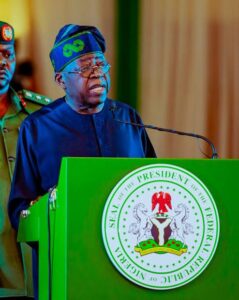
President Bola Ahmed Tinubu has reaffirmed his administration’s determination to confront terrorism, banditry, kidnapping and other forms of violent crime through a comprehensive technology-driven security strategy aimed at improving intelligence gathering, military operations and national defence capabilities.
The President made the commitment during the grand finale of the 2026 Nigerian Army Day Celebration (NADCEL) and the African Land Forces Forum held in Port Harcourt, Rivers State. Represented by Vice President Kashim Shettima, Tinubu said his administration remains resolute in ensuring that Nigeria’s security agencies are equipped with the tools, training and technological resources needed to effectively address the country’s evolving security challenges.
According to the President, modern security threats require modern solutions, stressing that the Federal Government is adopting emerging technologies and intelligence-led operations to enhance the effectiveness of the Armed Forces and other security agencies. He noted that integrating advanced surveillance systems, improved intelligence capabilities and innovative defence technologies into military operations would significantly strengthen Nigeria’s capacity to detect, prevent and respond to security threats.
Tinubu said his administration recognises the changing nature of warfare and criminal activities, explaining that terrorists and other criminal groups have continued to exploit technological advancements to coordinate attacks and evade security forces. He maintained that the government is equally committed to leveraging technology to stay ahead of such threats while protecting the lives and property of Nigerians.
The President disclosed that the Federal Government will continue to invest in modern military hardware, sophisticated communication systems, intelligence infrastructure and continuous professional training for members of the Armed Forces.
He explained that improving operational readiness remains a critical component of his administration’s security agenda, adding that military personnel must be adequately equipped to carry out their constitutional responsibilities.
He further stated that beyond acquiring modern equipment, the government is prioritising research, innovation and local production within Nigeria’s defence sector.
Tinubu highlighted ongoing efforts to reposition the Defence Industries Corporation of Nigeria (DICON), saying the revitalisation of the corporation is expected to reduce the country’s dependence on imported military equipment while boosting local manufacturing capacity.
According to him, strengthening domestic defence production will not only enhance national security but also promote technology transfer, create employment opportunities and stimulate industrial growth within the country. He expressed confidence that local defence manufacturing would improve Nigeria’s self-reliance in meeting the operational needs of its military and security institutions.
The President commended officers and soldiers of the Nigerian Armed Forces for their courage, professionalism and commitment in safeguarding the nation’s territorial integrity despite numerous security challenges confronting the country. He acknowledged the sacrifices made by military personnel serving in various theatres of operation, describing their dedication as critical to preserving Nigeria’s peace, unity and sovereignty.
Tinubu also paid tribute to members of the Armed Forces who lost their lives in the line of duty, assuring their families that the Federal Government remains committed to improving welfare packages for military personnel and providing adequate support for the dependants of fallen heroes. He reiterated that the sacrifices of those who have paid the supreme price in defence of the nation would never be forgotten.
The President emphasised that security remains a shared responsibility requiring collaboration among government institutions, security agencies, neighbouring countries and local communities. He therefore called for stronger regional cooperation in intelligence sharing, joint military operations and coordinated responses to transnational crimes, including terrorism, arms trafficking and organised criminal activities.
He observed that the security challenges confronting many African countries are increasingly interconnected, making it necessary for governments across the continent to deepen partnerships and strengthen collective efforts in tackling common threats. Tinubu said platforms such as the African Land Forces Forum provide valuable opportunities for military leaders to exchange ideas, share operational experiences and develop strategies capable of addressing emerging security risks.
He reaffirmed his administration’s commitment to building a modern, professional and highly motivated military capable of responding effectively to both conventional and asymmetric security threats. According to him, investments in technology, innovation, personnel development and institutional reforms will continue to receive priority attention as part of broader efforts to guarantee national security and sustainable development.
The President further assured Nigerians that his administration would remain focused on implementing policies designed to strengthen national security, restore public confidence and create an environment conducive to economic growth and investment. He stressed that peace and security remain fundamental to achieving the government’s development objectives.
The Nigerian Army Day Celebration, which commemorates the establishment and contributions of the Nigerian Army, also featured military displays, strategic discussions and engagements involving defence stakeholders from across Africa.
The event underscored the importance of regional collaboration in promoting peace, stability and security on the continent.
Tinubu’s address reflects the Federal Government’s renewed emphasis on deploying technology, innovation and intelligence-driven operations as central pillars of its strategy to combat terrorism and other security threats. The administration believes that combining modern defence technology with enhanced military capacity, local production of defence equipment and stronger regional cooperation will improve Nigeria’s ability to respond to the country’s evolving security landscape while safeguarding lives, property and national sovereignty. Visit www.jocomms.com for more news.
