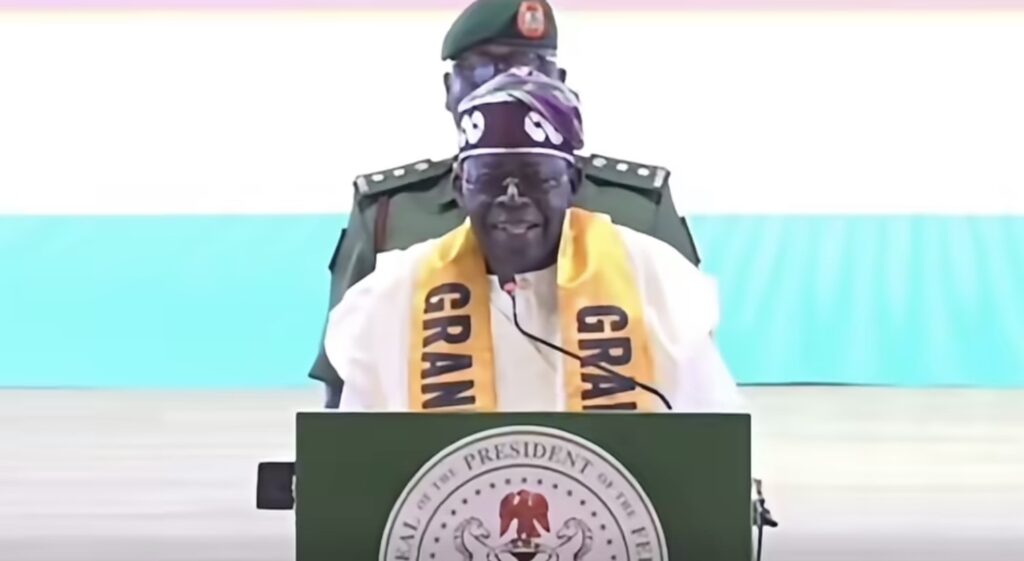
President Bola Ahmed Tinubu has called on the Nigerian media to prioritise truth, professionalism, and responsible journalism, urging journalists to choose “substance over sensation” and “credibility over clickbait” in the discharge of their duties.
Speaking at the maiden State House Media Dinner in Abuja, the President reaffirmed his administration’s commitment to press freedom, describing himself as a long-standing supporter and defender of an independent media.
Tinubu noted that democracy depends on a free press but stressed that freedom must be accompanied by responsibility, professionalism, and adherence to ethical standards.
He expressed concern over the growing spread of misinformation, disinformation, fake news, deepfakes, and digital manipulation, warning that journalists must not become channels for unverified information capable of harming national security or public trust.
According to the President, while government and the media often operate as democratic adversaries, they remain partners in nation-building, with government responsible for governance and the media tasked with holding public officials accountable.
Tinubu observed that the modern media environment has become increasingly vulnerable to speculation and sensationalism, urging journalists to distinguish facts from rumours and evidence from opinion.
He stressed that professional journalism remains essential in an era where social media has blurred the lines between verified reporting and unverified content.
The President also reminded media practitioners that freedom of expression does not amount to freedom to defame or deliberately mislead the public, adding that existing laws such as the Cybercrimes Act are intended to protect citizens and preserve the integrity of the information ecosystem.
Reaffirming his administration’s commitment to constitutional guarantees of press freedom and freedom of expression, Tinubu cited Sections 22 and 39 of the Constitution, as well as the Freedom of Information Act, as key pillars supporting transparency and accountability in governance.
The President used the occasion to highlight ongoing reforms by his administration, stating that Nigeria’s economy is showing signs of recovery through improved revenues, stronger foreign reserves, increased investor confidence, renewed investment in the oil and gas sector, and growth in the stock market.
He also pointed to ongoing security efforts, noting that intensified military operations, improved intelligence gathering, and enhanced inter-agency cooperation have resulted in the neutralisation of criminal elements, rescue of hostages, and recovery of communities previously under threat.
Tinubu called for deeper cooperation between government and the media, urging both institutions to strengthen mutual respect, professionalism, and their shared commitment to national development.
He concluded by encouraging the media to pursue truth over outrage, professionalism over sensationalism, and constructive engagement over needless hostility in order to strengthen Nigeria’s democracy and national progress.