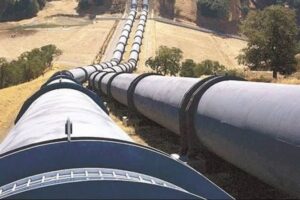
The Heads of State and Government of the Economic Community of West African States (ECOWAS) have signed an Intergovernmental Agreement (IGA) approving the construction of the Nigeria-Morocco African Atlantic Gas Pipeline (AAGP), marking a major milestone for one of Africa’s largest energy infrastructure projects.
The agreement was signed on Sunday during the ECOWAS Summit in Freetown, Sierra Leone, paving the way for the implementation of the nearly 6,800-kilometre pipeline, which is designed to transport up to 30 billion cubic metres (bcm) of natural gas annually from Nigeria through 13 West African countries to Morocco before connecting to the European gas network.
The pipeline will pass through Nigeria, Benin, Togo, Ghana, Côte d’Ivoire, Liberia, Sierra Leone, Guinea, Guinea-Bissau, The Gambia, Senegal, Mauritania and Morocco, where it will link with the Maghreb-Europe Gas Pipeline.
The project, initially launched by Morocco’s King Mohammed VI and former Nigerian President Muhammadu Buhari, continues to enjoy the support of President Bola Ahmed Tinubu. It is being jointly developed by Morocco’s National Office of Hydrocarbons and Mines (ONHYM) and the Nigerian National Petroleum Company Limited (NNPC Ltd.).
The agreement clears the way for the establishment of a project company, to be headquartered in Casablanca, Morocco, and a Pipeline Higher Authority, which will be based in Abuja, Nigeria. These institutions will oversee investor mobilisation and preparations for the Final Investment Decision (FID).
A separate signing ceremony involving Morocco and Mauritania is expected to be held later in Morocco in the presence of President Tinubu.
With an estimated cost of approximately $25 billion, the African Atlantic Gas Pipeline will have an annual transport capacity of 30 billion cubic metres of natural gas. Up to 15 billion cubic metres will be exported to Morocco and Europe, while the remaining volume will supply regional markets across West Africa.
The project aims to strengthen regional energy security, boost electricity generation, support industrialisation and promote economic integration across the continent. The first sections of the pipeline are expected to become operational at the beginning of the next decade.
ECOWAS described the agreement as a significant step toward building an integrated regional natural gas market, while reinforcing Africa’s commitment to energy cooperation, economic development and shared prosperity.
According to ONHYM and NNPC Ltd., the project’s key engineering, environmental and technical studies have been completed, allowing it to advance into the operational development phase. Visit www.jocomms.com for more news.
