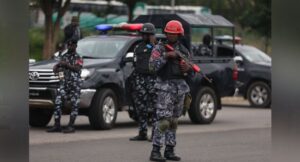
A legal practitioner, Mrs. Bunmi Aina-Craig, has warned against granting state governors direct control over the proposed state police, saying such an arrangement could undermine the independence of law enforcement and create room for political interference.
Speaking on the ongoing debate over the establishment of state police in Nigeria, Aina-Craig argued that while the initiative has the potential to improve security across the country, it must be backed by strong constitutional safeguards that prevent abuse of power. According to her, placing the command and operational structure of state police entirely in the hands of governors could weaken democratic institutions and compromise justice.
She explained that one of the major concerns surrounding the proposal is the possibility that state police could be used as a political tool rather than as a professional security institution. She noted that governors already wield considerable influence within their states, and giving them direct authority over police recruitment, funding, deployment, promotions, and disciplinary measures could expose officers to political pressure.
Aina-Craig stressed that security agencies must remain impartial and operate strictly within the provisions of the law. She maintained that policing should be guided by professionalism, accountability, and respect for the rights of citizens rather than political interests. According to her, an independent policing structure would help ensure that officers carry out their constitutional responsibilities without fear or favour.
She further advocated the establishment of independent oversight bodies that would supervise the operations of state police and ensure transparency in decision-making. Such institutions, she said, should be responsible for monitoring recruitment processes, investigating allegations of misconduct, and ensuring that the police remain accountable to the law and the public.
The lawyer also recommended that funding arrangements for state police should be structured in a way that guarantees operational independence. She argued that relying solely on state governments for financial support could make police commands vulnerable to undue political influence, particularly during periods of political disagreement or election campaigns.
According to her, constitutional provisions establishing state police should clearly define the powers and responsibilities of governors, state legislatures, police authorities, and oversight institutions. She emphasized that clearly defined roles would help prevent conflicts of authority while strengthening public confidence in the new policing system.
The debate over state police has gained momentum as Nigeria continues to grapple with widespread security challenges, including banditry, kidnapping, terrorism, communal clashes, armed robbery, and other violent crimes.
Supporters of the proposal argue that decentralising policing would enable states to respond more effectively to local security threats, improve intelligence gathering, and foster stronger collaboration between law enforcement agencies and local communities.
They also believe that officers recruited from within their respective states would possess better knowledge of local languages, cultures, geography, and community dynamics, making policing more effective and improving crime prevention efforts.
However, opponents remain concerned that without adequate constitutional checks and balances, state police could be manipulated by political office holders to intimidate opponents, suppress dissent, or influence electoral processes. These concerns have remained central to discussions whenever the issue of decentralised policing is raised.
Aina-Craig acknowledged the need for reforms aimed at strengthening Nigeria’s security architecture but insisted that institutional independence must remain a priority. She argued that effective policing can only thrive where officers are protected from political interference and allowed to perform their duties professionally.
She urged lawmakers, constitutional experts, civil society organisations, and other stakeholders to ensure that any legal framework establishing state police includes robust accountability mechanisms capable of preventing abuse while protecting the rights and freedoms guaranteed under the Constitution.
Her remarks come as efforts to establish state police continue to progress through the constitutional amendment process.
The proposal recently secured approval in the Senate as part of broader constitutional reforms designed to address Nigeria’s evolving governance and security challenges. Before becoming law, however, the amendment must receive the endorsement of at least two-thirds of the state Houses of Assembly, in line with constitutional requirements.
As deliberations continue, the question of how to balance operational efficiency with institutional independence remains at the centre of the national conversation. While many stakeholders agree that state police could significantly enhance internal security, legal experts such as Aina-Craig maintain that the success of the initiative will ultimately depend on the strength of the safeguards put in place to protect the institution from political control and ensure that it serves the interests of all Nigerians rather than those of elected officials. Visit www.jocomms.com for more news.
