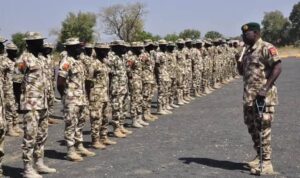
The Nigerian Army has reportedly opposed a fresh proposal to deploy repentant Boko Haram members alongside troops in ongoing counter-insurgency operations in Nigeria’s North-East, citing concerns over security, operational integrity, and the safety of military personnel. The development has reignited debate over the role of rehabilitated former insurgents in the country’s fight against terrorism and the broader challenges of post-conflict reconciliation.
According to military sources quoted by The Guardian, many soldiers have expressed strong reservations over an alleged plan requiring them to work closely with former Boko Haram fighters who recently completed the Borno State Government’s deradicalisation and reintegration programme. The troops reportedly believe that involving former insurgents in active military operations could expose security formations to unnecessary risks and undermine years of progress made in the fight against terrorism.
The sources claimed that some of the rehabilitated ex-fighters had already been attached to local security groups supporting military operations in parts of Borno State. While these local groups often assist the military with intelligence gathering, surveillance, and community-based security activities, soldiers reportedly fear that integrating former insurgents into such roles could compromise sensitive information and create opportunities for infiltration.
According to the report, many serving soldiers remain unconvinced that all individuals who surrendered have genuinely renounced violent extremism.
They argued that trust cannot be established solely through rehabilitation programmes, particularly given the long history of attacks carried out by Boko Haram against military formations, civilians, and humanitarian workers across the North-East.
Military personnel reportedly warned that deploying former insurgents alongside troops could negatively affect morale within the armed forces. Many soldiers have spent years fighting Boko Haram and have lost colleagues in the conflict. As a result, some believe working directly with individuals who previously belonged to the terrorist group could create psychological challenges and reduce confidence among frontline troops.
The concerns come shortly after the Borno State Government concluded another phase of its “Borno Model” deradicalisation and reintegration initiative. During the latest exercise, the government reintegrated 720 former insurgents, 992 spouses, and 2,050 children into various communities after completing rehabilitation programmes designed to prepare them for civilian life.
State officials have consistently defended the reintegration programme, describing it as an important component of long-term peacebuilding in the North-East. According to the government, participants undergo comprehensive rehabilitation, including psychological counselling, religious reorientation, vocational and skills acquisition training, civic education, and other activities intended to discourage a return to violent extremism.
Authorities also maintain that the programme seeks to reduce the number of active fighters by encouraging defections while promoting reconciliation between former insurgents and affected communities. Officials argue that military operations alone cannot completely eliminate insurgency without complementary non-kinetic measures aimed at addressing the root causes of radicalisation.
The Borno State Government has stated that since the launch of the initiative in 2021, more than 350,000 individuals have left insurgent camps, while 9,680 former insurgents have formally completed rehabilitation and reintegration through multiple batches of the programme.
Government officials believe the initiative has contributed significantly to weakening terrorist groups operating in the region.
Despite these assurances, the programme has continued to attract criticism from sections of the public, security experts, victims of insurgency, and some members of the military. Critics argue that communities devastated by years of violence often remain reluctant to accept former insurgents, particularly those suspected of involvement in deadly attacks. They also question whether existing rehabilitation measures are sufficient to guarantee lasting behavioural change.
The reported opposition by military personnel highlights the delicate balance between pursuing peace through rehabilitation and maintaining confidence among security forces engaged in frontline operations. Analysts note that successful reintegration requires not only government commitment but also public trust, effective monitoring, and strong security safeguards to prevent any possibility of recidivism.
As of the time of the report, the Nigerian Army had not issued an official response to the allegations surrounding the proposed deployment of repentant Boko Haram members in military operations.
According to The Guardian, efforts to obtain comments from the Director of Army Public Relations were unsuccessful, as calls and text messages seeking clarification did not receive a response.
The latest development is expected to further fuel national conversations on Nigeria’s counter-insurgency strategy, with many stakeholders calling for a careful balance between rehabilitation initiatives and the security concerns of military personnel tasked with protecting lives and restoring peace across the North-East. Visit www.jocomms.com for more news.
