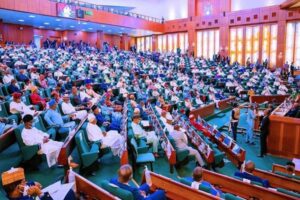
The House of Representatives has intensified calls on President Bola Ahmed Tinubu to adopt a more robust, coordinated, and intelligence-driven military response to rising cases of banditry, kidnapping, and armed violence across Nigeria, warning that the current security situation requires urgent and sustained national attention.
The resolution followed extensive deliberations during plenary, where lawmakers raised concerns over what they described as a continuing escalation of insecurity in several parts of the country, particularly in rural and semi-urban communities that have repeatedly come under attack by armed groups. Members noted that despite ongoing military operations and security deployments, criminal networks continue to operate with increasing boldness, targeting villages, highways, farms, schools, and places of worship.
Lawmakers expressed concern that the persistent attacks have led to widespread displacement of communities, disruption of agricultural activities, and growing humanitarian challenges in affected regions. They warned that the inability of many rural populations to safely access their farmlands has contributed to reduced food production, rising food prices, and deepening economic hardship for vulnerable households.
As part of its resolutions, the House summoned the Minister of Defence, the National Security Adviser, the Chief of Defence Staff, the Chief of Army Staff, the Inspector-General of Police, and heads of other relevant security agencies to appear before it for a comprehensive briefing. The lawmakers said the engagement would focus on current operational strategies, inter-agency coordination, intelligence-sharing mechanisms, and the challenges limiting the effectiveness of counter-banditry operations.
The House further demanded detailed explanations on the deployment of security personnel and equipment across high-risk areas, as well as updates on ongoing operations aimed at dismantling criminal hideouts in forested regions often used as operational bases by armed groups. Members stressed that improved surveillance, rapid response capabilities, and better coordination among security agencies were critical to reversing the trend of attacks.
During the debate, several lawmakers strongly condemned the continued targeting of vulnerable communities, including attacks on schools, abductions of students, and assaults on religious centres. They described such incidents as deeply alarming and unacceptable, stressing that they undermine public confidence in the state’s ability to guarantee safety and protect fundamental rights.
Some members also raised concerns about the psychological and social impact of repeated kidnappings on families, noting that many victims’ relatives are forced into financial distress due to ransom demands, while survivors often suffer long-term trauma. They argued that insecurity is not only a security challenge but also a growing social and economic crisis requiring multi-dimensional solutions.
The House also urged the Federal Government to strengthen community-based security structures, improve intelligence gathering at grassroots levels, and invest in modern surveillance technologies such as drones, communication systems, and real-time monitoring tools to enhance military effectiveness.
Lawmakers emphasized the need for accountability in security spending, calling for periodic audits and transparent reporting on defense allocations to ensure resources are effectively deployed to frontline operations. They also stressed that coordination between federal, state, and local security frameworks must be improved to close existing gaps exploited by criminal groups.
Responding to the broader security concerns, the Tinubu administration has consistently maintained that security remains a top priority, with the Federal Government directing the Armed Forces and other security agencies to intensify operations, strengthen intelligence-led policing, and sustain pressure on criminal elements operating across the country.
The House is expected to hold further engagements with top security officials in the coming days, where detailed operational briefings will be presented, including progress reports on ongoing missions, challenges encountered in the field, and strategic plans aimed at achieving long-term stability and restoring public confidence in affected regions. Visit www.jocomms.com for more news.