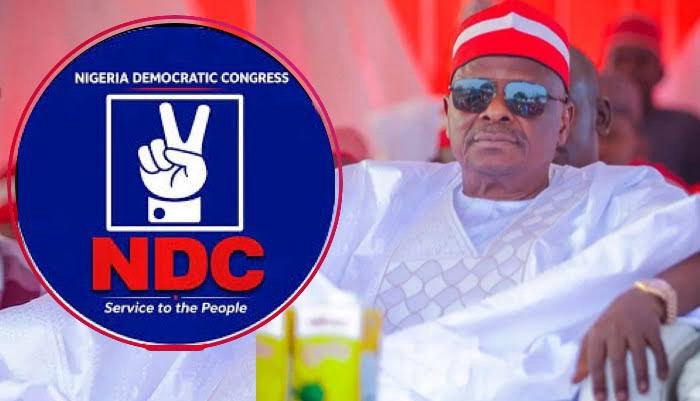
A crisis is brewing in the Nigeria Democratic Congress (NDC) over the sharing formula between old and new members in the Kano chapter of the party, amid allegations of marginalisation and internal disagreement over agreed political arrangements.
It was gathered that tensions emerged following attempts to sideline members who recently joined the party alongside the leader of the Kwankwasiyya Movement, Senator Rabiu Musa Kwankwaso.
At the initial stage, old members had expressed concerns about possible domination after Kwankwaso’s entry into the party. However, both sides later agreed to a 60–40 sharing formula for executive positions and candidates, with Kwankwaso’s bloc taking 60 per cent while the original members retained 40 per cent.
The party subsequently conducted consensus arrangements to select executives and candidates, with Kwankwaso emerging as the vice presidential candidate of the party, running alongside Labour Party’s presidential candidate in 2023, Peter Obi.
However, days after the release of candidate lists, grievances resurfaced as old members accused the Kwankwasiyya bloc of failing to adhere to the agreed formula, alleging their marginalisation in the process.
In response, five House of Representatives seats and seven state assembly tickets were reportedly taken from Kwankwaso’s nominees and reassigned to members of the original party structure.
A document signed by the Kano State party chairman confirmed adjustments to several federal and state constituencies, including Kumbotso, Nassarawa, Kano Municipal, Doguwa/Tudunwada, Dawakin Tofa/Rimin Gado/Tofa, Sumaila/Takai, and Gwale.
Party stakeholders said the initial agreement was meant to ensure balance, but disagreements over implementation have triggered renewed tensions within the state chapter.
Earlier disputes had also arisen shortly after Kwankwaso joined the party, when the state chairman resisted alleged attempts to hand over full control of the party structure. The matter was later resolved by the national leadership, allowing the existing chairman to remain in office while accommodating the new bloc in line with the arrangement.
A spokesperson of the Kano State chapter of the party accused the Kwankwasiyya bloc of ignoring repeated calls for fair implementation of the 40 per cent allocation, insisting that members would take additional seats to meet their quota.
He argued that several candidates had already been positioned before Kwankwaso joined the party and accused the leadership of disregarding earlier understandings.
In response, the Kwankwasiyya Movement dismissed the allegations, insisting that the consensus process was fully inclusive and that all stakeholders were carried along during candidate selection.
The group expressed surprise that the issue was being raised days after the conclusion of primaries and maintained that the claims of exclusion were unfounded.
Meanwhile, the party has announced measures aimed at strengthening internal democracy, enforcing discipline, and improving reconciliation among members. These include the establishment of a code of conduct for officials and candidates, a reconciliation committee for aggrieved members, and stricter oversight of affiliated groups.
The party also reaffirmed that it remains supreme over individual interests and urged members to align their activities with its collective goals and ideology.
A political analyst warned that the ongoing crisis could affect the party’s electoral strength, particularly the Obi–Kwankwaso ticket, noting that unresolved grievances in Kano could impact voter support and trigger possible defections.
He added that resolving the internal disagreements quickly would be critical to the party’s performance in future elections.
